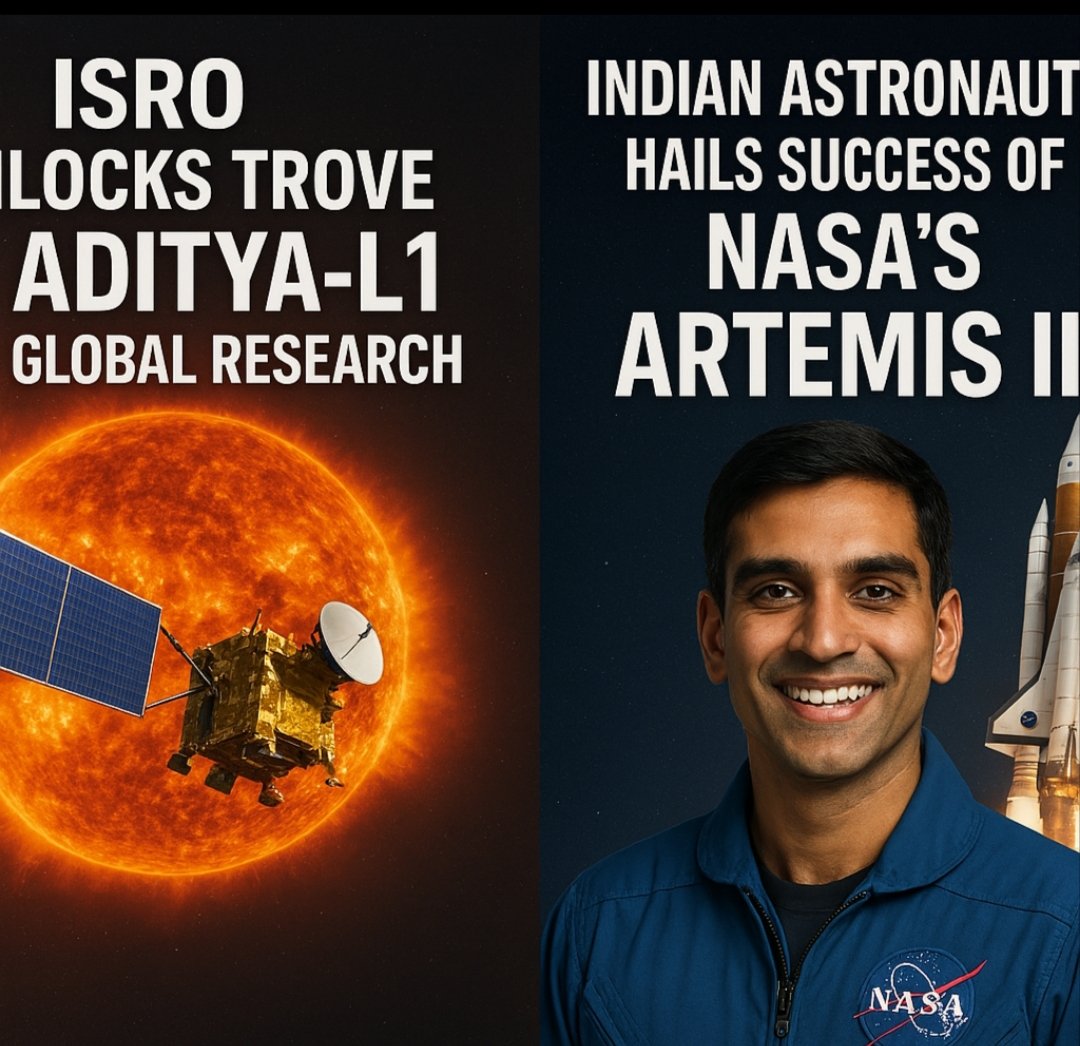
Bengaluru, India:The Indian Space Research Organisation (ISRO) has taken a major step in advancing global understanding of solar dynamics by formally opening the next phase of its groundbreaking Aditya-L1 mission. Today, ISRO issued its second ‘Announcement of Opportunity’ (AO), inviting scientists from the Indian solar physics community and academic institutions to submit research proposals based on the massive datasets collected by the spacecraft.Since reaching its destination at the Lagrange Point 1 (L1)—some 1.5 million kilometers from Earth—Aditya-L1 has been operational and continuously monitoring the Sun without interruption from eclipses. ISRO disclosed that the mission has already transmitted over 27 Terabytes (TB) of high-resolution data. This second research cycle (July–September 2026) aims to foster innovative studies into critical solar phenomena, including coronal mass ejections (CMEs), solar winds, and the ultraviolet spectrum, utilizing the mission’s advanced imaging instruments.The announcement coincides with a wave of excitement sweeping the space sector following the successful execution of NASA’s Artemis II mission—the first crewed flyby of the Moon in over half a century. Although a NASA mission, Artemis II holds significant strategic importance for India, which is a signatory to the Artemis Accords, a framework for international cooperation in lunar exploration.Indian astronaut Shubhanshu Shukla, currently undergoing training, celebrated the lunar mission’s success, stating that it represents “a giant leap for collective humanity and a vital precursor to sustainable lunar bases.” Shukla noted that the data shared through the Artemis partnership will directly benefit India’s future human spaceflight endeavors, including the upcoming phases of the Gaganyaan program. ISRO’s twin focus on deep solar research and crewed lunar exploration underscores India’s rapidly growing prominence in the global space race.
ISRO Unlocks Trove of Aditya-L1 Data for Global Research; Indian Astronaut Hails Success of NASA’s Artemis II