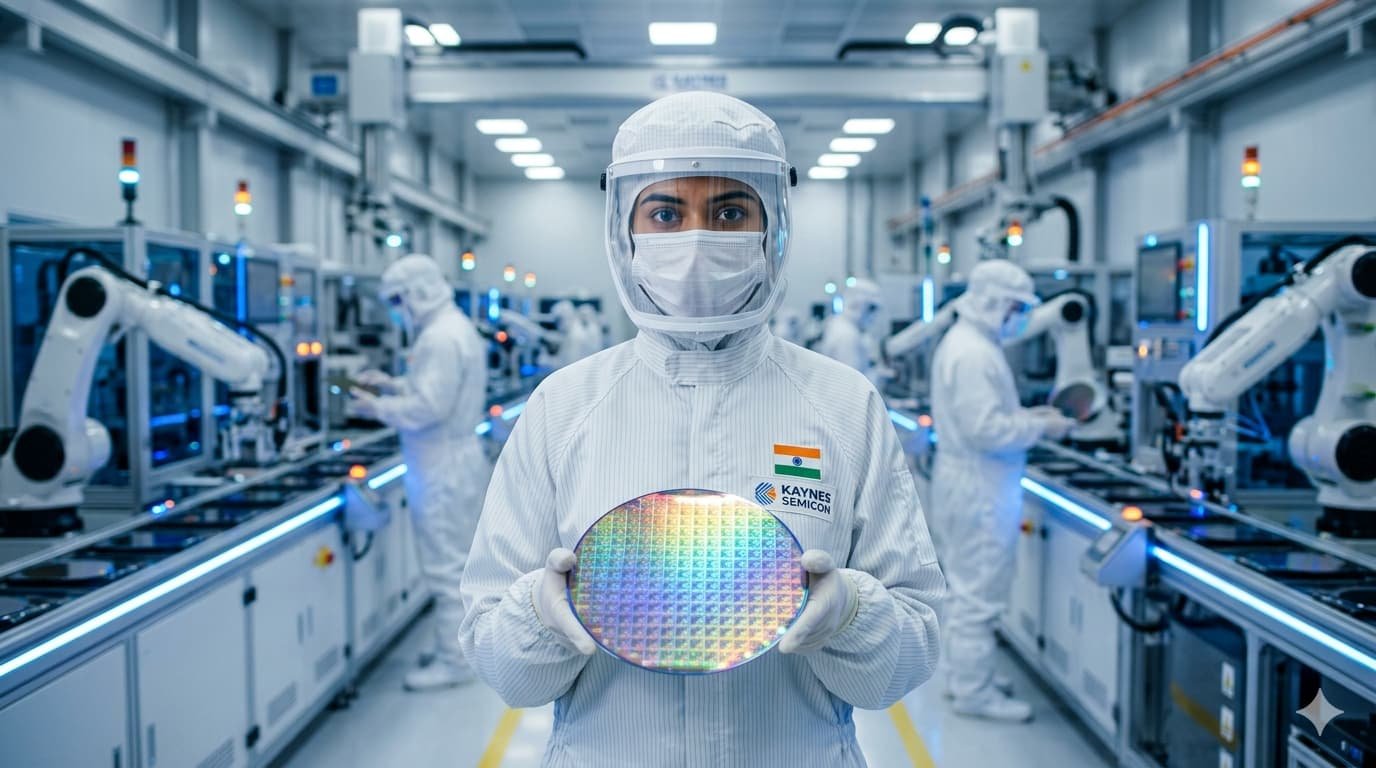
SANAND, GUJARAT – On April 5, 2026, India’s “Silicon Valley of the West” officially shifted into high gear. Following its high-profile inauguration earlier this week, the Kaynes Semicon OSAT facility in Sanand has successfully completed its first 100 hours of 24/7 commercial operations. This milestone marks the definitive transition of India from a semiconductor consumer to a global manufacturing powerhouse, producing approximately 6.3 million chips daily. ⚡ Key Highlights: The Sanand Semiconductor MilestoneProduction Powerhouse: The ₹3,300 crore facility is now operational at scale, specializing in substrate-based packages and wire-bond interconnects.* Record Execution: The plant moved from foundation-laying to commercial production in just 14 months, setting a new global benchmark for industrial turnaround. Digital Sovereignty: These “Made in India” chips are slated for use in domestic electric vehicles (EVs), smartphones, and consumer electronics, reducing import reliance by an estimated 15% in the first year.Local Impact: The facility has already generated over 5,000 high-tech jobs in the Sanand GIDC corridor, fueling a secondary boom in local logistics and housing.The Heart of India’s ‘Techade’The buzz in Sanand today is palpable. Engineers and technicians, many of whom have returned from overseas “brain drain” stints, are now overseeing a sophisticated assembly line that rivals those in Hsinchu or Seoul. This facility isn’t just a factory; it is the physical manifestation of the Prime Minister’s vision for an AtmaNirbhar (Self-Reliant) electronic ecosystem.By producing 6.3 million chips per day, the Kaynes plant addresses the critical “OSAT” (Outsourced Semiconductor Assembly and Test) gap in India’s supply chain. While the world watches the Dholera Fab construction for 2028, Sanand is delivering the goods now, ensuring that “India Inside” becomes a reality for global electronics.Strategic Resilience Amid Global VolatilityThe timing of the Sanand scale-up is critical. As geopolitical tensions in the Middle East continue to impact global energy prices and shipping routes, India’s domestic semiconductor capacity provides a crucial “strategic buffer.”Unlike previous years where Indian manufacturers were at the mercy of global “chip famines,” the 2026 landscape allows local EV players like Tata Motors and Mahindra to source components within a 500km radius of their assembly plants. This “Local-for-Global” strategy is expected to shave off significant lead times for the festive season production cycles later this year.Beyond the Silicon: A Social TransformationThe impact extends far beyond the cleanrooms. The Sanand-Ahmedabad corridor is witnessing a massive infrastructure uplift. From dedicated high-speed data corridors to specialized skill-development centers, the “Semiconductor Effect” is transforming Gujarat’s industrial landscape into a high-tech hub that attracts global talent.
📊 Impact Analysis: The Chip Dividend
| Metric | 2025 (Pre-Plant) | 2026 (Operational) | Strategic Outcome |
|---|---|---|---|
| Chip Import Dependency | 95% | 80% (Projected) | Enhanced National Security & Forex savings. |
| Direct High-Tech Jobs | 1,200 | 6,500+ | Upskilling of the Indian workforce. |
| Daily Production | Nil | 6.3 Million Units | Global supply chain diversification. |
| Regional Investment | ₹5,000 Cr | ₹25,000 Cr+ | Sanand becomes a “Tier 1” Global Tech Hub. |