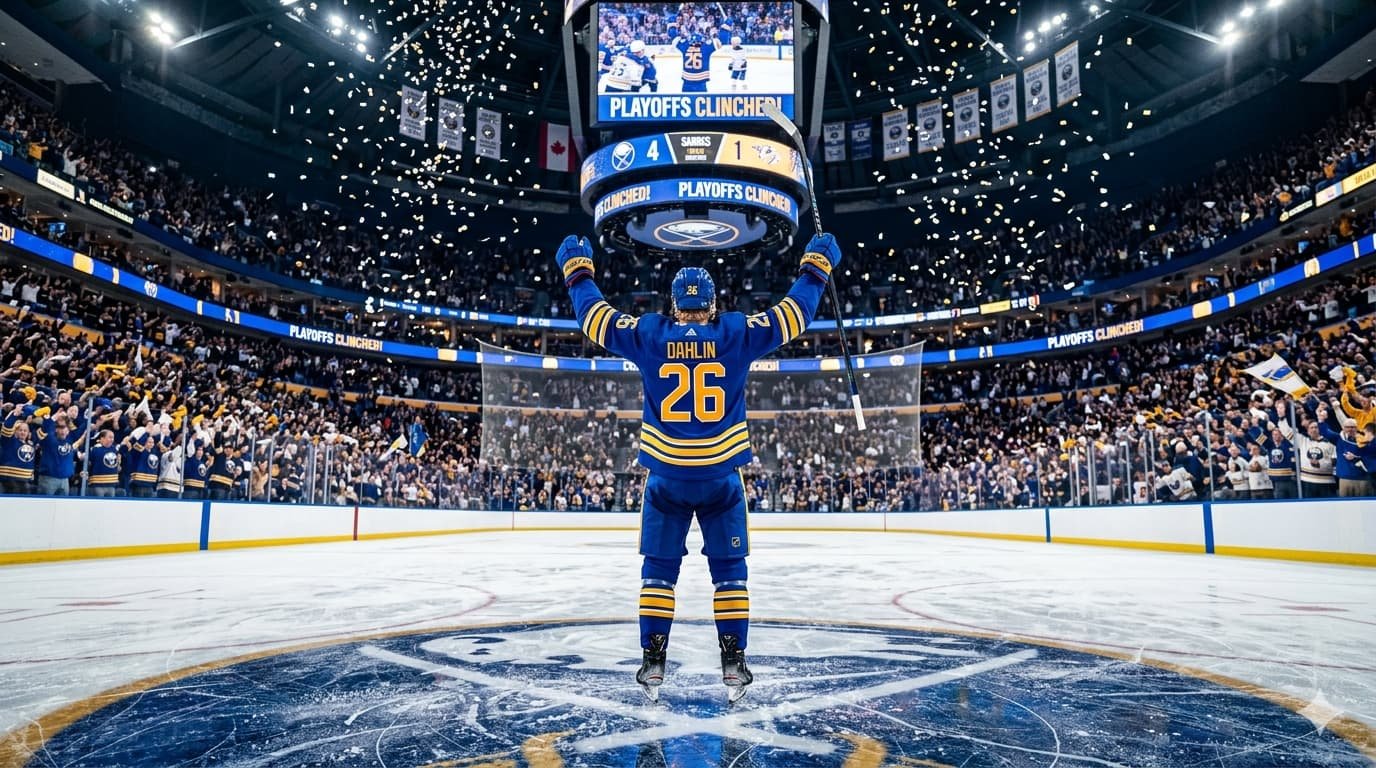
BUFFALO / TORONTO – In a moment that has redefined the 2026 NHL season, the Buffalo Sabres have officially snapped the longest postseason drought in league history. On April 5, 2026, following a regulation win by the New York Rangers over the Detroit Red Wings, the Sabres (46-23-8) mathematically secured their spot in the 2026 Stanley Cup Playoffs, ending a grueling 14-season absence from spring hockey.
The news sparked emotional celebrations across the border, as the Sabres—long a “second team” for many Southern Ontario hockey fans—celebrated with a tribute video narrated by the late, legendary voice of the franchise, Rick Jeanneret.
Key Highlights
- History Made: The Sabres end a 14-season playoff drought, the longest in NHL history, officially clinching on April 5, 2026.
- Double Clinch: Both the Buffalo Sabres and the Tampa Bay Lightning punched their tickets to the postseason simultaneously.
- Record-Breaking Debut: Captain Rasmus Dahlin will enter his first-ever playoffs with the most points by any defenseman in NHL history prior to a debut.
- The Lightning Streak: Tampa Bay matches Colorado for the longest active streak with nine consecutive playoff appearances.
A City Reborn: Ending the 14-Season Wait
For the Buffalo faithful and the thousands of Canadian fans who cross the Peace Bridge for home games, this clinch is more than just a statistical victory. Since mid-December, the Sabres have posted the league’s best points percentage, fueled by a young, high-octane core that finally matured into a dominant force in the Atlantic Division.
The emotional weight of the moment was amplified by the franchise’s digital tribute. Using archival audio from Rick Jeanneret, the team released a video titled “Beyond the Blue and Gold,” which went viral across Canadian sports networks within minutes of the clinch. The video served as a bridge between the lean years of the “tank era” and the current roster’s elite status.
Dahlin and the Power of the Blue Line
Central to this success is captain Rasmus Dahlin. As he prepares for his Stanley Cup Playoff debut, Dahlin has already etched his name in the record books. No defenseman in the history of the NHL has accumulated more career points before making their first playoff appearance. His leadership, alongside a breakout season from the team’s young forward core, has transformed Buffalo from a “work in progress” to a legitimate Stanley Cup contender.
“We knew we had the pieces, but this year the culture changed,” Dahlin remarked during a post-clinch interview. “We aren’t just happy to be here. We want to make noise.” The Sabres now join the Tampa Bay Lightning, who also secured their berth today, marking their ninth straight year in the hunt for the Cup.
The “Inside Out” Era: NHL Meets Animation
Adding a unique flair to today’s hockey headlines, the NHL is gearing up for the “Inside Out Classic” between the Capitals and Rangers. In a cross-promotional event with Disney, members of both teams participated in a pre-game Q&A with characters like Anger, Anxiety, and Sadness. While the Sabres celebrated their relief (Joy), the rest of the Atlantic Division is feeling the Anxiety of a tightened playoff race as the regular season enters its final week.
Impact Analysis
1. Market Surge and Fan Engagement
The Sabres’ return to the playoffs is expected to drive a massive surge in regional TV ratings and ticket sales. For the NHL, having a storied “Rust Belt” franchise back in the mix—especially one with a massive Canadian secondary fan base—is a significant commercial win.
2. Defensive Evolution
Rasmus Dahlin’s record-breaking season prior to his debut is a case study for the modern NHL. It highlights the shift toward mobile, high-scoring defensemen as the primary engines of team success, a trend other rebuilding franchises like Ottawa and Montreal are closely watching.
3. Ending the “Drought Narrative”
By finally clearing the 14-year hurdle, the Sabres have removed a psychological weight from the organization. History suggests that teams ending long droughts often perform well; the 2019 Hurricanes and 1988 Devils both reached the Conference Finals after ending similar stretches.