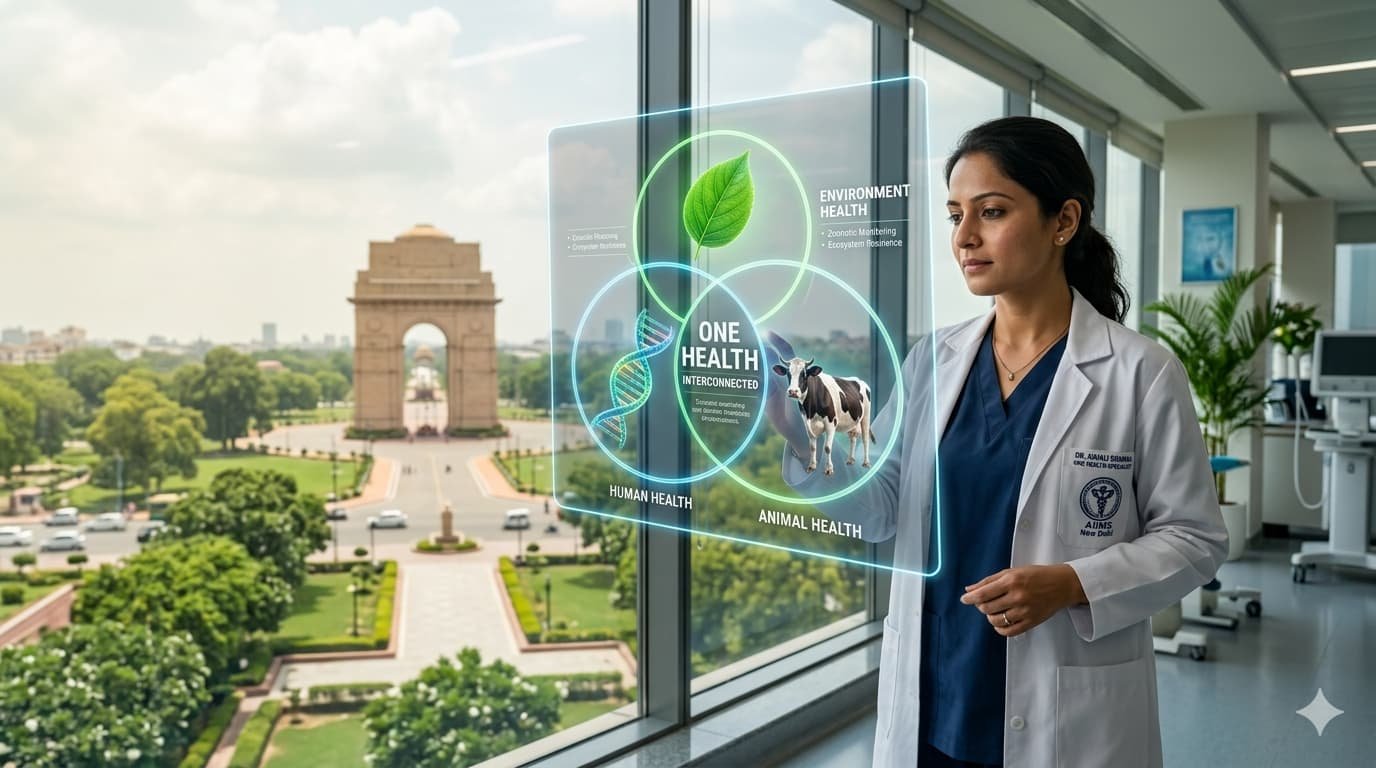
NEW DELHI — As the sun rose over the capital today, April 7, 2026, India joined the global community in celebrating World Health Day, anchored by the poignant theme: “Together for health. Stand with science.” In a year marked by significant geopolitical shifts and the lingering economic ripples of the West Asia conflict, the 2026 observance serves as a critical turning point for India’s healthcare strategy. The Ministry of Health and Family Welfare, in collaboration with the World Health Organization (WHO), headlined today’s events with a call to integrate the “One Health” approach—recognizing that human wellbeing is inextricably linked to the health of animals and the environment.
Key Highlights
- Global Theme: “Together for health. Stand with science” emphasizes evidence-based policymaking.
- One Health Integration: New initiatives launched to bridge human, animal, and environmental health sectors.
- Digital Health Surge: Expansion of AI-driven diagnostic tools across rural health wellness centers.
- Resilience Amid Conflict: Healthcare budget focus shifts toward self-reliance (Atmanirbhar Bharat) due to global supply chain volatility.
Science-Backed Solutions for a Modern India
Addressing a summit in New Delhi, Union Health Minister Shri Mansukh Mandaviya underscored that India’s post-pandemic recovery has been fueled by a “science-first” mentality. With the nation facing inflationary pressures on essential medicines due to the ongoing regional conflicts in West Asia, the government today announced a new “Scientific Self-Reliance” roadmap.
This plan aims to decentralize the production of Active Pharmaceutical Ingredients (APIs) and leverage indigenous biotechnology. The minister highlighted that the “Stand with Science” directive is not merely a slogan but a fiscal priority, aiming to protect the 1.4 billion population from external market shocks that have recently seen fuel and transport costs impact medical logistics.
The ‘One Health’ Mandate: Beyond Human Care
A major takeaway from today’s trending discussions is the formalization of the National One Health Mission. Experts argue that with the rising frequency of zoonotic spillovers, India cannot afford to treat human medicine in a vacuum.
The 2026 campaign emphasizes scientific achievements in vaccine equity and environmental surveillance. From the Mudumalai Tiger Reserve to the urban centers of Bengaluru, new surveillance networks were activated today to monitor wildlife health as an early warning system for potential human pandemics. This move aligns with the WHO’s global year-long campaign to turn scientific evidence into actionable grassroots policy.
Digital Equity and Rural Healthcare Access
Coinciding with World Health Day, the government also integrated the Universal Acceptance (UA) principles into the national digital health stack. This ensures that digital health records and tele-consultation services are now accessible in all 22 scheduled languages, including scripts like Devanagari, Gurmukhi, and Tamil.
By removing linguistic barriers, India is utilizing science and technology to ensure that “Together for Health” includes the last mile. This digital push is particularly vital as the nation navigates the challenges of the historic 2026 Census and the upcoming elections, where health infrastructure remains a top-tier voter concern.
Impact Analysis
The shift toward a science-led, integrated health model carries profound implications:
- Economic Stability: By investing in “One Health” and indigenous science, India reduces long-term costs associated with pandemic outbreaks and imported medical inflation.
- Public Trust: The “Stand with Science” campaign acts as a vital counter-narrative to misinformation, strengthening the efficacy of national vaccination and nutrition programs.
- Global Leadership: India’s success in multilingual digital health positioning (via Universal Acceptance) serves as a blueprint for other Global South nations.