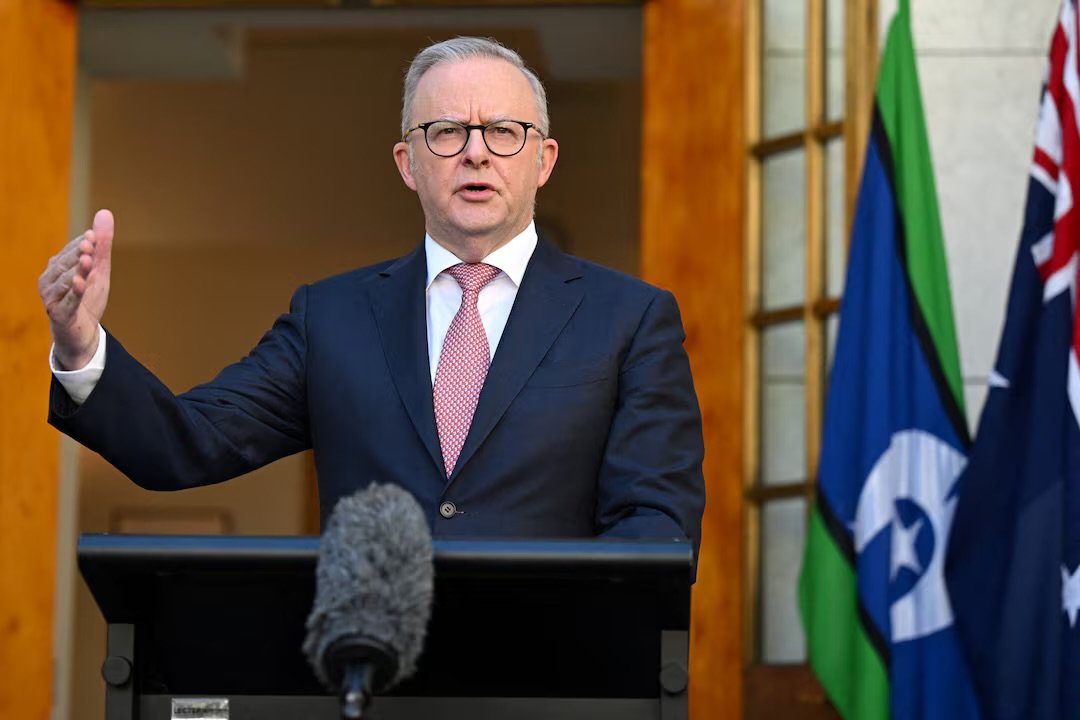
CANBERRA – Prime Minister Anthony Albanese has broken his government’s cautious silence on US President Donald Trump’s rhetoric, labelling threats to Iranian civilian infrastructure as “inappropriate” and warning they could have triggered a global economic catastrophe.In a candid interview with Sky News host Kieran Gilbert on Wednesday, Albanese responded to the narrow avoidance of a massive military escalation. Overnight, President Trump had threatened that a “whole civilisation will die tonight” unless Iran agreed to a deal—a deadline that was only averted by a last-minute, two-week ceasefire mediated by Pakistan.‘Extraordinary’ RhetoricThe Prime Minister did not mince words when discussing the President’s targets, which reportedly included Iranian bridges and power stations.“The potential of damage to civilian infrastructure in Iran was an extraordinary statement to make,” Albanese said. “The impact that would have arisen from an escalation… would have led to greater global economic damage.”While Albanese welcomed the temporary reopening of the Strait of Hormuz as a “very positive” development, he emphasised that the conduct of any conflict must remain within the bounds of international law.“I don’t think it’s appropriate to use language such as that from the President of the United States,” he added, noting that such statements “cause some concern” regarding the protection of non-combatant civilians.Economic Fallout Hits Home: Petrol Prices SurgeThe geopolitical tension is already being felt by Australian households. Despite the brief two-week pause in hostilities, the instability in the Middle East has sent shockwaves through energy markets.Fuel Hikes: Petrol prices across major Australian capitals have begun to climb again this week, following a brief period of relief earlier in April.Global Impact: Albanese noted that Australians are seeing a “substantial impact” from a war on the other side of the world, specifically citing the volatility in pump prices and supply chain uncertainty.Market Reaction: Traders remain wary of the “two-week” window, with many fearing that if the Strait of Hormuz is restricted again after the ceasefire expires, prices could hit record highs.The Alliance Under PressureThe Prime Minister’s comments represent a shift in tone for the Labor government, which has spent months attempting to navigate a “constructive” relationship with the Trump administration.When pressed by Gilbert on whether this rhetoric undermines the US-Australia alliance, Albanese was firm: “The United States is our most important ally… but we are two great democracies, and that [relationship] will continue.”However, with internal Sky News polling suggests over 70% of Australians believe the US has handled the conflict poorly, the Prime Minister is facing increasing domestic pressure to distance Australia from Washington’s more aggressive stances.
Albanese Criticises Trump’s ‘Extraordinary’ Iran Threats as Fuel Prices Rise