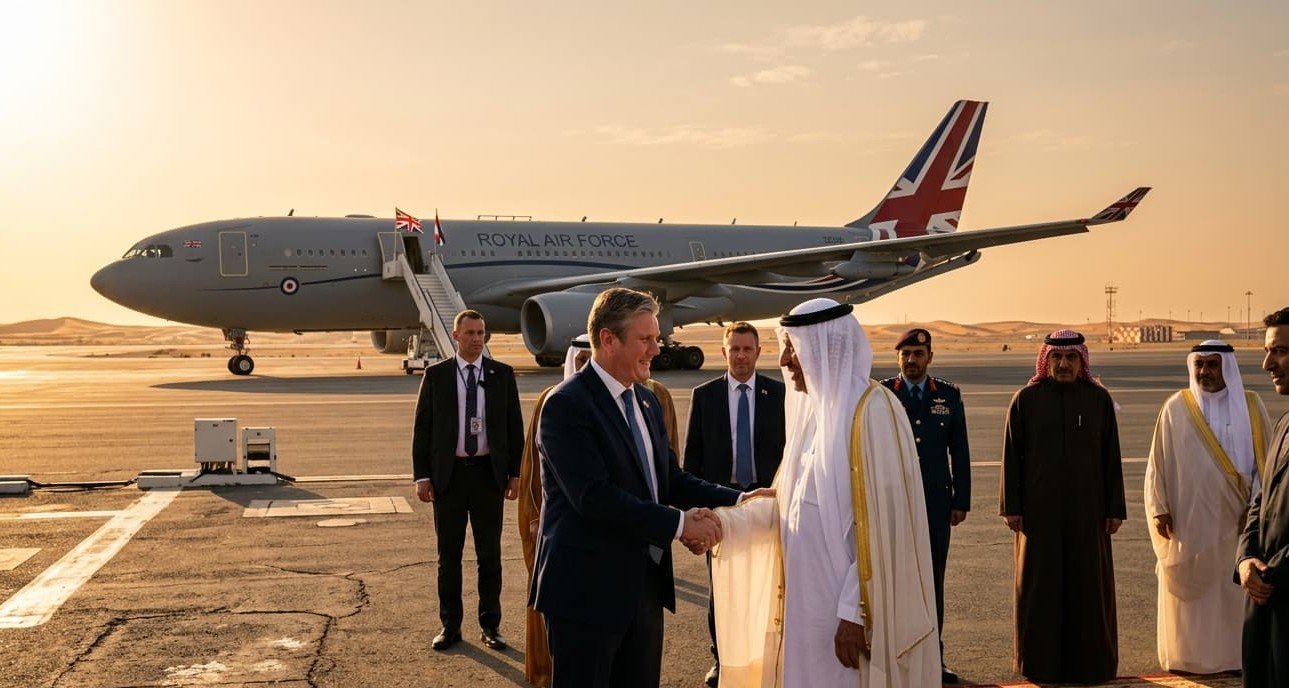
LONDON — Prime Minister Keir Starmer has arrived in the Middle East today, 8 April 2026, marking a pivotal moment in British diplomacy as the world breathes a collective sigh of relief. The visit follows a dramatic overnight announcement of a two-week ceasefire between the United States and Iran, a deal brokered just hours before a looming military deadline. The Prime Minister’s mission is clear: to solidify the fragile truce and ensure the permanent reopening of the Strait of Hormuz, a global energy artery that had been choked by weeks of escalating conflict.
Key Highlights
- Diplomatic Breakthrough: PM Keir Starmer travels to the Gulf to support the 14-day US-Iran ceasefire.
- Economic Relief: Brent crude oil prices plunge 16% to $93.92, providing much-needed relief for UK inflation.
- Market Surge: The FTSE 100 rallies alongside global markets following the reopening of the Strait of Hormuz.
- Immigration Shifts: New UK visa fee increases and “Global Talent” design pathways take effect today.
A Strategic Pivot in the Middle East
Starmer’s arrival in the Gulf coincides with a significant de-escalation in rhetoric from Washington. Following weeks of “maximum pressure,” the White House confirmed it would suspend planned strikes on Iranian infrastructure in exchange for immediate maritime access.
Downing Street has stated that the UK will play a “leading role” in the practical efforts to restore freedom of navigation. The Prime Minister is expected to meet with regional leaders to discuss a multilateral security framework that prevents a return to hostilities once the 14-day window closes. “This is a moment of relief, but not a moment for complacency,” Starmer remarked upon landing.
Global Markets Rally as Oil Prices Plunge
The economic impact of the ceasefire was instantaneous. In the City of London, the FTSE 100 opened sharply higher, mirroring a 5.4% surge in Japan’s Nikkei and strong gains on Wall Street. Investors, who had been bracing for a global energy shock, reacted with euphoria as Brent crude plummeted from over $110 to $93.92 per barrel.
For the British public, this is more than just a number on a trading screen. The drop in oil prices offers a potential “inflation brake” for a UK economy that has been struggling with high energy costs and rising mortgage rates. Analysts suggest that if the ceasefire holds, the Bank of England may have more breathing room to consider interest rate cuts later this summer.
Domestic Policy: Visa Changes Take Flight
Amidst the geopolitical whirlwind, significant domestic changes have quietly taken effect today. The Home Office has officially implemented its revised immigration fee structure. Most notably, the Electronic Travel Authorization (ETA) fee has risen to £20, and sponsorship license costs for businesses have seen a sharp uptick.
However, it isn’t all about rising costs. Today also marks the launch of the new “design endorsement” pathway under the Global Talent route. This expansion aims to attract world-class innovators in science, digital technology, and arts, reinforcing the government’s post-conflict strategy of positioning the UK as a global hub for high-skill industries.
Impact Analysis
The 8 April ceasefire has created a ripple effect across three major sectors:
- Energy Security: The reopening of the Strait of Hormuz immediately stabilizes the UK’s natural gas and oil supply chain, potentially lowering household bills by Q3.
- Geopolitical Standing: By positioning himself at the center of the diplomatic effort, Starmer is attempting to re-assert the UK’s influence in a “post-broker” world, often dominated by US-China-India dynamics.
- Financial Stability: The rally in sterling (up 1% against the dollar) strengthens the UK’s purchasing power but may challenge exporters if the currency becomes overvalued during the recovery phase.