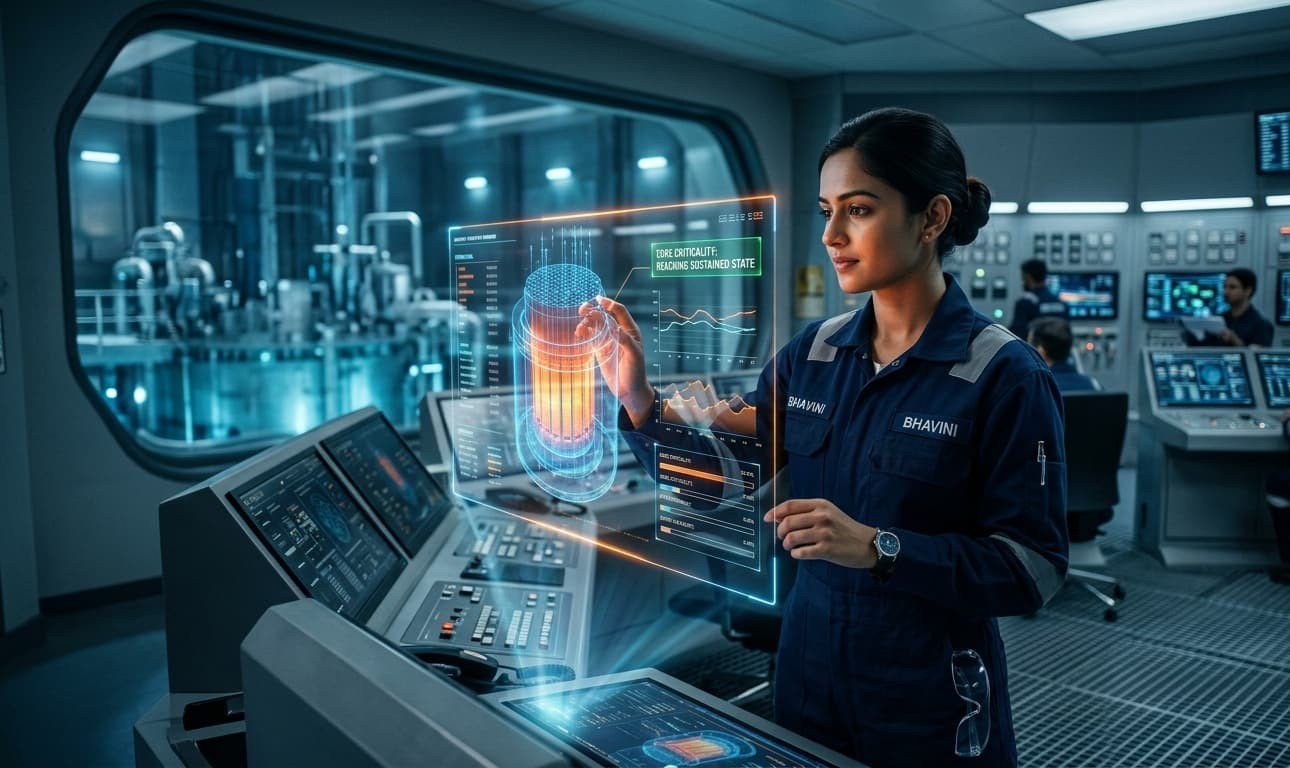
NEW DELHI – In a monumental stride toward long-term energy independence, India’s nuclear energy program achieved a historic milestone today, April 9, 2026. Following the official announcement of the Prototype Fast Breeder Reactor (PFBR) hitting criticality in Kalpakkam, the scientific community and energy sector are celebrating a feat nearly seven decades in the making. This breakthrough firmly places India at the forefront of global nuclear innovation.
Key Highlights: India’s Nuclear Achievement
- The Milestone: The 500 MWe PFBR achieved criticality, marking the start of a self-sustaining nuclear chain reaction.
- Global First: India is the first country to commercially deploy a fast breeder reactor using domestically available thorium.
- Energy Goal: This achievement is pivotal to India’s target of reaching 100 GW of nuclear electricity by 2047.
- Three-Stage Vision: Successfully advances the vision proposed by Dr. Homi Bhabha in 1958 to utilize India’s vast thorium reserves.
- Sodium-Cooled Tech: The reactor utilizes liquid sodium as a coolant, a complex technology mastered by only a few nations.
Mastering the Fast Breeder: A 70-Year Scientific Journey
The path to today’s success began in 1958 when Homi Bhabha and N. B. Prasad presented a comprehensive nuclear energy program to the UN. While traditional reactors use uranium-235, India’s PFBR is designed to “breed” more fuel than it consumes. It converts uranium-238 into plutonium-239 while simultaneously utilizing thorium to create fissile material.
Constructed by BHAVINI at the Indira Gandhi Centre for Atomic Research (IGCAR), the project faced decades of technical complexities and regulatory hurdles. The transition to liquid sodium cooling—essential for heat transfer in fast reactors—required pioneering engineering that has previously thwarted programs in France and Japan. Today’s success signifies that Indian scientists have officially tamed this volatile but highly efficient technology.
The Thorium Advantage: Solving the Uranium Deficit
One of the most trending topics under #NuclearIndia today is the “Thorium Factor.” India holds roughly 25% of the world’s thorium reserves but has limited domestic uranium. By reaching criticality with the PFBR, India has unlocked the key to the third stage of its nuclear program: the thorium-based cycle.
“This is not just about a single reactor; it’s about fuel security for the next century,” noted a senior scientist at the Department of Atomic Energy (DAE). Unlike traditional light-water reactors that rely on expensive imports, the PFBR allows India to repurpose “spent fuel” from its older Pressurised Heavy Water Reactors (PHWRs), effectively turning waste into a goldmine of clean energy.
Economic Stability and the RBI’s Cautious Support
Coinciding with the nuclear breakthrough, the Reserve Bank of India’s (RBI) Monetary Policy Committee today decided to keep the Repo rate unchanged at 5.25%. The central bank cited the ongoing West Asia conflict as a reason for its “cautious and calculated” approach to the economy.
However, market analysts suggest that the nuclear milestone provides a massive psychological boost to long-term industrial sentiment. Stable energy prices are the bedrock of manufacturing growth, and the PFBR’s entry into the national grid promises a future of reliable, low-carbon baseload power that can mitigate the volatility of fossil fuel imports.
Impact Analysis: A Paradigm Shift for Energy & Geopolitics
The criticality of the PFBR has immediate and long-term implications:
- Strategic Autonomy: By mastering the closed fuel cycle, India reduces its dependence on the Nuclear Suppliers Group (NSG) for uranium imports, strengthening its geopolitical leverage.
- Climate Leadership: As India pushes for “Net Zero,” nuclear power provides a steady alternative to coal that renewables like solar and wind cannot yet match in terms of consistent load capacity.
- The SHANTI Act Effect: This breakthrough coincides with the implementation of the SHANTI Act, which facilitates private sector participation in the nuclear supply chain, potentially opening up a multi-billion dollar domestic market.