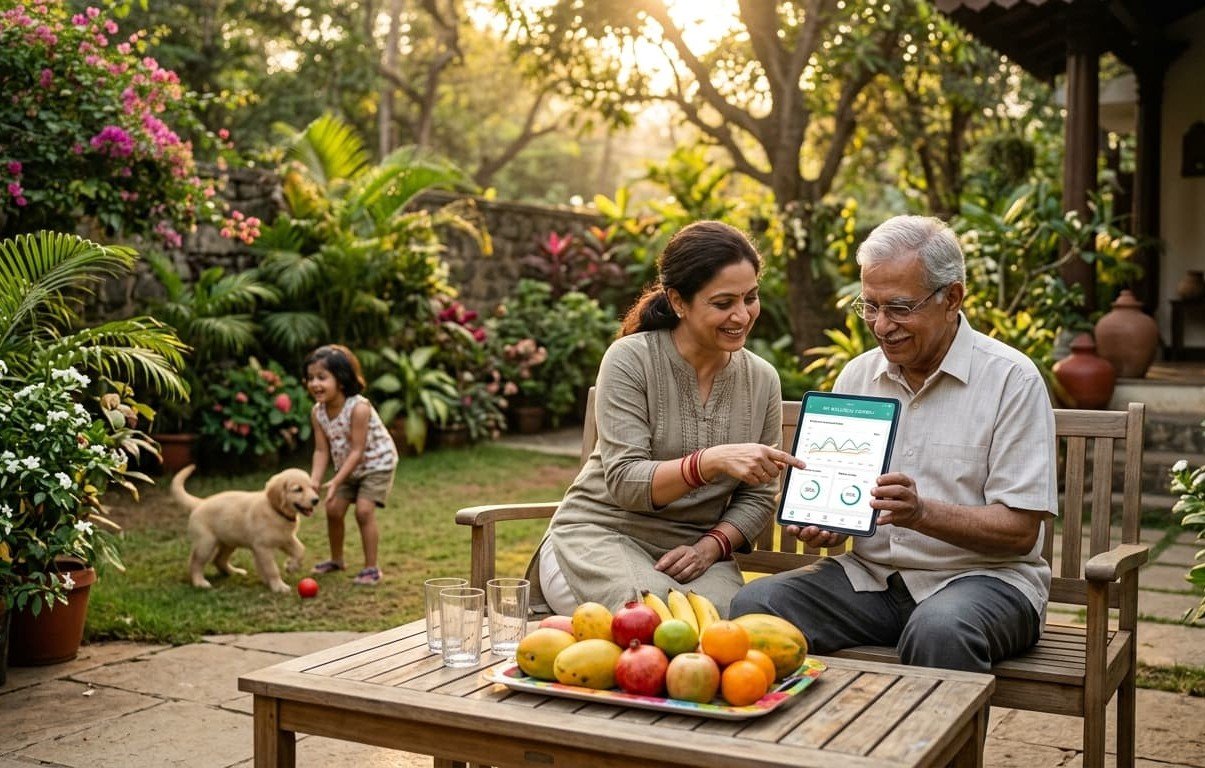
For the longest time, the Indian relationship with healthcare was “firefighting.” You didn’t call the doctor until the fever was high or the pain was sharp. But walk through a neighborhood park in Delhi or browse a grocery aisle in Mumbai today, April 11, 2026, and you’ll see a different story. The conversation has shifted from “How do I get well?” to “How do I stay well?”
With the Indian wellness and nutraceutical market officially crossing the $10 billion mark this month, it’s clear that we are no longer just a nation of patients—we are becoming a nation of proactive health enthusiasts.
The Kitchen as the New Clinic
The most significant change isn’t happening in hospitals; it’s happening in our shopping carts. Nearly 65% of urban households have now made “preventive spending” a permanent part of their monthly budget. We are seeing a generation that prioritizes curcumin-fortified lattes and ashwagandha supplements as much as their morning tea.
It’s about the IT professional who uses a wearable to track their glucose spikes before a big meeting, and the grandmother who now understands her “gut microbiome” better than her local chemist. We’ve realized that the most expensive medicine is the one you take too late.
Insurance Finally Speaks Our Language
A massive catalyst for this shift has been the recent, aggressive push by the IRDAI. For years, insurance felt like a “hospital-only” safety net. But in 2026, the walls have come down.
The integration of AYUSH—Ayurveda, Yoga, and Naturopathy—into mainstream insurance coverage has been a game-changer. When a middle-class family knows their preventive yoga therapy or Ayurvedic detox is covered by their policy, wellness stops being a luxury and becomes a lifestyle. It’s a long-overdue nod to our traditional roots, backed by modern financial sense.
High-Tech, High-Touch
While we’re looking back at our heritage, we are also leaning into a high-tech future. The Biopharma Shakti initiative has turned India into a global laboratory for preventive biologics. We are seeing AI-driven startups that don’t just give you a generic diet chart but analyze your unique genetic makeup to tell you exactly what your body needs. It’s healthcare that feels personal, not clinical.
Impact Analysis
| Stakeholder | The Shift | The Outcome |
| Families | Moving from “sick care” to “well care.” | Higher quality of life and fewer medical debt crises. |
| Doctors | Becoming “health coaches” rather than just “firefighters.” | Better long-term management of chronic diseases. |
| The Economy | India emerging as a global wellness hub. | Massive growth in the R&D and nutraceutical exports. |