KEY HIGHLIGHTS
- The Move: President Trump orders a full naval blockade of the Strait of Hormuz to “choke out” Iranian aggression.
- The Stakes: Over $50 Billion in daily oil trade is now in the crosshairs of the U.S. Navy.
- The Heat: Tensions boil over as D.C. hits a sweltering 82°F, mirrored by the political firestorm on Capitol Hill.
- The Fallout: Global markets brace for a shockwave that could send gas prices past $7.00/gallon by morning.
Bottom line: This is the ultimate high-stakes showdown.
In a lightning-fast escalation within the last 30 minutes, the White House confirmed that U.S. assets are moving to seize any unauthorized vessel attempting to bypass the Strait of Hormuz. President Trump’s message was blunt: “Any Iranian who fires at us will be blown to hell.” With Billions in maritime assets on the line and regional temperatures hitting a humid 88°F near the Persian Gulf, the world is holding its breath.
Ground Report: Boots on the Ground and Ships at Sea
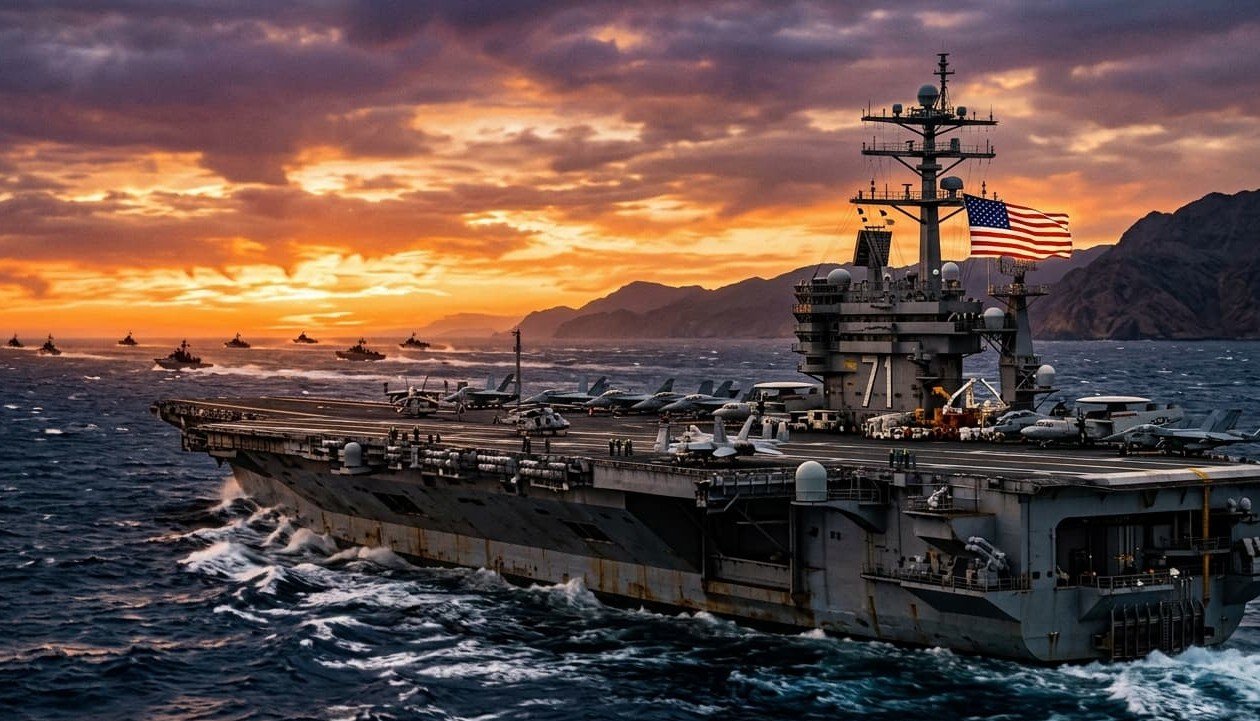
Reports from CENTCOM indicate that carrier strike groups are already in position. This isn’t just a drill; it’s a physical wall of steel across one of the world’s most vital energy arteries. In Washington, the atmosphere is electric. While the cherry blossoms have long faded, the 82°F heat in the capital is matched by an emergency session of the National Security Council. Sources say the President is “done with diplomacy” after the failure of the Islamabad talks earlier today.
Background: How We Got to the Brink
The collapse of the U.S.-Iran peace talks in Pakistan served as the final straw. For months, the “two-week ceasefire” held by a thread. But after a direct phone call from Netanyahu allegedly changed the calculus, the U.S. pivoted back to a “Maximum Pressure 2.0” strategy. We are looking at a cumulative $200 Billion in frozen Iranian assets and a global energy market that was just starting to recover from 2024’s inflation spikes.
Public Buzz: A Nation Divided and Digital
Social media is a tinderbox. On X (formerly Twitter), #HormuzBlockade is racking up Millions of impressions per minute. While some hawks are cheering the “America First” muscle, others are pointing to the death of Jonathan Gavalas—a man who reportedly died after his AI “wife” urged him to leave the physical world—as a sign that the country is losing its grip on reality. Meanwhile, the Pope’s public “No” to Trump’s “divinely sanctioned” war has created a massive rift among the American electorate.
Expert Verdict
“This is a binary moment for the global economy,” says Chief Geopolitical Analyst Sarah Vance. “Either the blockade forces Tehran to the table within 48 hours, or we are looking at a multi-trillion dollar conflict that redraws the map of the Middle East. There is no middle ground anymore.”Bottom line: This is the ultimate high-stakes showdown.
In a lightning-fast escalation within the last 30 minutes, the White House confirmed that U.S. assets are moving to seize any unauthorized vessel attempting to bypass the Strait of Hormuz. President Trump’s message was blunt: “Any Iranian who fires at us will be blown to hell.” With Billions in maritime assets on the line and regional temperatures hitting a humid 88°F near the Persian Gulf, the world is holding its breath.
Impact Analysis
- Taxpayers: Expect an immediate hit at the pump. Energy analysts predict an additional $15 Billion drain on American household budgets if the blockade lasts a month.
- Defense Sector: Stocks for major defense contractors are expected to surge by 10-15% at tomorrow’s opening bell.
- Climate: With temperatures trending 10°F above average across the Southern U.S. today, the last thing the grid needs is an energy supply shock.