DUBAI/WASHINGTON | APRIL 20, 2026
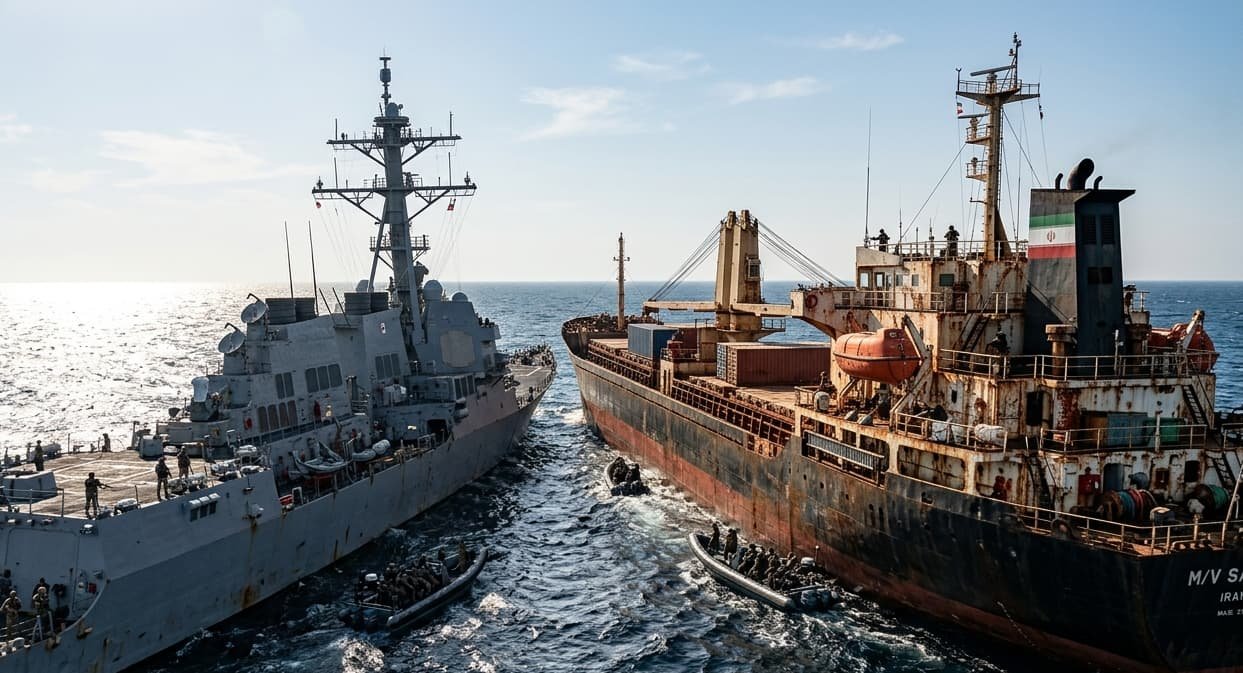
Tensions in the Middle East reached a flashpoint on Monday morning after the U.S. Navy intercepted and seized an Iranian-flagged cargo ship, the M/V Touska, near the strategic Strait of Hormuz. The move, described by Washington as an enforcement of its naval blockade, has drawn a fierce reaction from Tehran, which labeled the act “piracy” and a direct violation of the fragile ceasefire.
The Interception The Arleigh Burke-class destroyer USS Spruance conducted the armed boarding in the North Arabian Sea after the cargo vessel reportedly ignored repeated warnings to change course. According to U.S. Central Command (CENTCOM), the ship was suspected of carrying prohibited dual-use technology destined for Iranian military ports.
Tehran’s Ultimatum Iran’s Joint Military Command issued a stern warning within hours of the seizure, stating that its forces have been authorized to “respond in kind.” The Iranian foreign ministry suggested that if the blockade is not lifted, the Strait of Hormuz—through which 20% of the world’s oil passes—will remain “completely closed” to all international traffic, including neutral vessels.
Diplomatic Deadlock The incident comes just 48 hours before the current two-week truce is set to expire on Wednesday, April 22. While Pakistani mediators have been frantically working to arrange a second round of talks in Islamabad, Iran’s state media reported today that the country “is not currently planning to attend” any further negotiations with the United States.
Global Impact The news of the seizure sent Brent crude prices climbing over 6% in early trading, touching $96.25 per barrel. Shipping giants have reportedly diverted at least 15 India-bound tankers to alternate routes, fearing a full-scale naval conflict in the Gulf of Oman.