MUMBAI, April 23, 2026
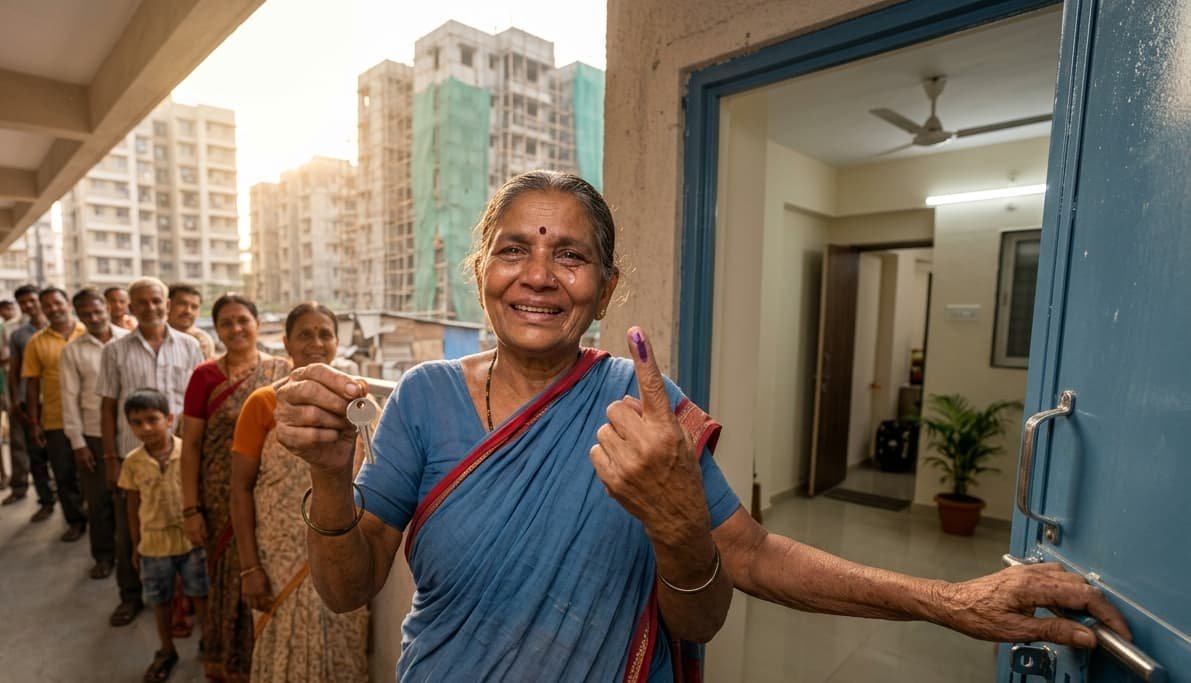
The dusty lanes of Dharavi witnessed a quiet revolution this morning. In a moment that will be etched in Mumbai’s complex history, the keys to the very first apartment in the ambitious Dharavi Redevelopment Project (DRP) were officially handed over to Sangeeta Bhise and her family. For Sangeeta, who has lived her entire life in a 10×10 kholis (room), opening the door to a 350-square-foot self-contained, high-rise flat was more than just a real estate transaction; it was the realization of a generations-old dream.
The event, marked by traditional Marathi turi (marigold) garlands and the breaking of coconuts, represents the first tangible victory in a project that has spanned decades and ignited fierce debates. As the first dozen families began moving their belongings—some with tears of joy, others with cautious optimism—the air in Dharavi was thick with the scent of change, a scent far sweeter than the open drains and tanning leather that have long defined this space.
Key Highlights
- A Historic Shift: The first 50 flats in Sector 1 of the DRP were occupied today, marking the beginning of the end of Asia’s largest slum in its current form.
- The Eligibility Breakthrough: Sangeeta Bhise’s family, residents since before the 2000 cutoff, became the symbolic face of the successful transition.
- A Model of Integration: DRP CEO, S. Swaminathan, confirmed the “Integrated Living Model,” ensuring original residents are clustered together, not scattered.
- The ‘Ghatak’ Plan: The next phase will focus on rehabilitating the 10,000+ small industrial units (ghataks) that form Dharavi’s economic engine, with new vertical micro-industrial parks.
Dharavi’s Second Chance: More Than Just a High-Rise
For the longest time, the word ‘Dharavi’ was shorthand for squalor and poverty, but also, paradoxically, for an unrelenting spirit of industry. Today, it’s shorthand for hope. This morning, at a small ceremony near the Mahim Creek area, the long-standing narrative of delay and dispute was replaced by the clink of keys.
The first building, ‘Sahyadri Sadan,’ is a 24-story tower featuring 350-square-foot flats—a massive upgrade from the cramped, common-toilet kholis they replaced. These flats come with a master bedroom, a hall, a kitchen, and, crucially, separate attached toilets. For Sangeeta’s mother, Parvati-aai, it was that attached toilet that was the biggest wonder.
Navigating the Politics of Rehabilitation
However, the path to ‘Sahyadri Sadan’ was not easy. The DRP, led by the Adani Group, has been mired in controversy regarding eligibility cut-offs, the definition of a ‘legitimate’ resident, and fears that the redevelopment would destroy the informal economy. The fact that the first move-ins have occurred is a testament to the persistence of a dedicated state-level grievance cell and community leaders who acted as mediators.
Project officials have emphasized that this is not just an urban renewal but a “social and economic transplant.” The goal is to rehouse residents within a 2-km radius of their original locations, preserving vital community networks and access to livelihoods. This is the crucial ‘Integrated Living Model’ that aims to prevent the social dislocation seen in past slum rehabilitation projects in Mumbai.
What’s Next? Industry, Not Just Housing
The housing component is only one facet of the DRP. Dharavi is a $1 billion dollar micro-economy, home to thriving industries in recycling, leather goods, and pottery. The greatest concern remains the rehabilitation of these 10,000+ commercial and industrial units (ghataks).
Phase 2, set to begin in June 2026, will involve constructing “vertical micro-industrial parks.” These parks will feature large floor plates, specialized waste management, and heavy-duty power supplies, tailored to Dharavi’s diverse industries. CEO Swaminathan reassured, “We are not just moving people; we are moving their businesses. If we fail in that, we fail in the project.”