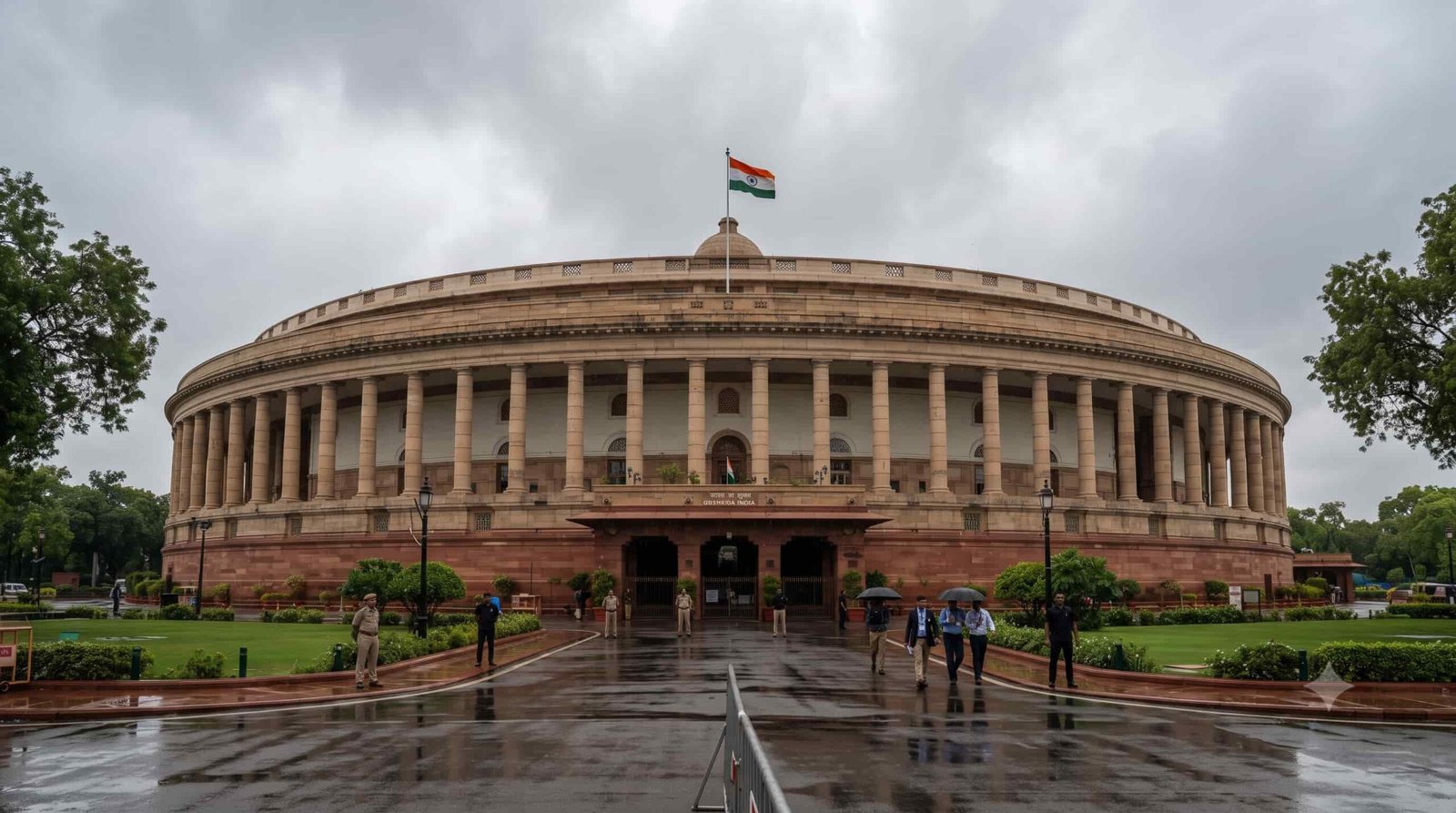
Parliament clears legislation introducing stringent judicial oversight for delayed registrations, alongside heated legislative debates.
[NEW DELHI] – [August 5, 2026]
The Rajya Sabha passed the Births and Deaths (Amendment) Bill, 2026, on Tuesday, mandating strict judicial clearance for birth and death registrations delayed beyond two years.
piloted by the Ministry of Home Affairs, the legislation amends Section 13 of the principal Act to shift authority from executive magistrates to first-class judicial magistrates for late documentations. The enactment coincides with heightened political friction inside Parliament as opposition parties pressed for expanded debates on national governance and security issues.
Tightening Delayed Registration Norms
Under the amended framework, the reporting window remains largely unchanged for events recorded within one to two years, which continue to require approvals from district or sub-divisional executive authorities.
However, registrations exceeding the two-year threshold now demand explicit orders from a first-class judicial magistrate. Government floor leaders stated that the tighter compliance architecture aims to eliminate administrative leakages and establish a foolproof national civil registry.
Legislative Proceedings and Opposition Protests
Both houses witnessed repeated disruptions as opposition members demanded formal discussions regarding recent administrative actions and student agitations in the capital. Despite procedural adjournments, the Lok Sabha successfully cleared the Appropriation (No. 3) Bill, 2026, by voice vote.
Cabinet ministers defended the legislative agenda, emphasizing that the session remains focused on administrative modernisation, financial allocations, and systemic accountability across public institutions.
Broader Political Landscape
The parliamentary friction unfolds against the backdrop of shifting regional dynamics, including recent electoral outcomes and ongoing electoral roll verifications managed by the Election Commission of India.
Political analysts note that legislative momentum remains high as the ruling coalition continues to advance core administrative reforms despite intensified opposition resistance in both chambers.