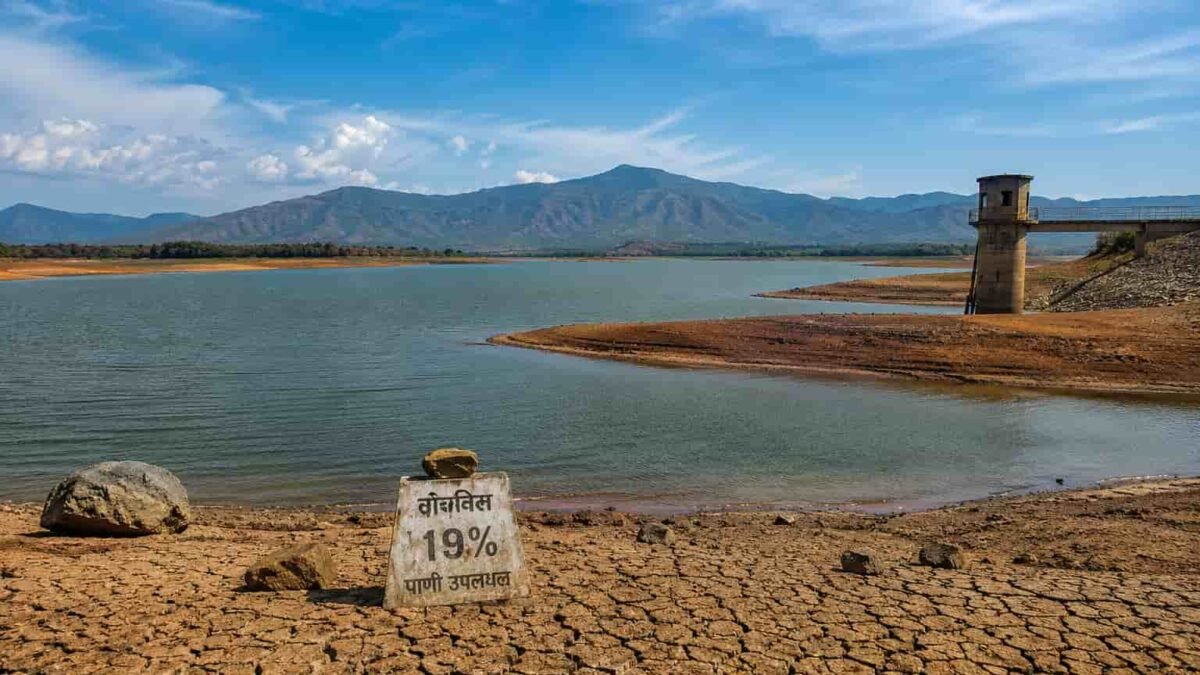
BHANDARA – [August 12, 2026]: A severe water crisis looms over Maharashtra’s Bhandara district—popularly known as the ‘district of lakes’—as poor rainfall during the initial months of the monsoon has depleted local reservoirs. Water storage at the famous Chandpur Lake, nestled in the foothills of the Satpura mountain range, has plunged to an alarming 19% of its total capacity. Owing to weak monsoon activity triggered by the El Niño effect, water inflow into the reservoir has remained drastically low. Recognizing the gravity of the situation, the Irrigation Department has abruptly suspended water supply for agricultural irrigation, reserving the remaining storage strictly for drinking water purposes.
Capacity of 28 Million Cubic Meters Reduced to Just 5.57 MCM
The escalating Bhandara Chandpur Lake Water Scarcity has plunged farmers and residents across more than 40 surrounding villages into deep uncertainty. Spanning an expansive area of 388 hectares, Chandpur Lake possesses a total live storage capacity of 28 million cubic meters (MCM). However, official data reveals that the reservoir currently holds merely 5.57 MCM of usable water. With water levels dropping so sharply in early August, serious concerns have emerged among agricultural communities regarding the upcoming Rabi crop season, which heavily relies on canal water during October and November.
Highlighting the plight of local farmers, a resident from the Chandpur area stated, “Even after two months of monsoon, the lake remains largely empty. With irrigation water cut off, saving our current Kharif crops has become difficult, and we are fearful about whether we can cultivate any crops during the Rabi season.”
Impending Water Crisis Threatening Over 40 Villages
Chandpur is also a popular tourist destination due to its scenic surroundings and historic Hanuman temple. However, the dwindling water levels have adversely impacted local tourism. Officials warn that high temperatures could accelerate evaporation, further reducing the available drinking water supply.
According to a senior Irrigation Department official, “Our primary priority right now is securing drinking water for citizens across all connected habitations. Any decision to resume agricultural irrigation will depend strictly on future monsoon rainfall. Citizens and local bodies are urged to use available water judiciously.” The worsening Bhandara Chandpur Lake Water Scarcity serves as a stark warning sign for the entire district administration.
Key Takeaways:
- Depleted Storage: Chandpur Lake holds just 19% (5.57 MCM) of its total 28 MCM capacity.
- Irrigation Halted: Agricultural water supply suspended to prioritize drinking water requirements.
- 40 Villages Affected: Severe water crisis looming over more than 40 rural habitations.
- Agricultural Threat: Looming threat to upcoming Rabi crops following Kharif season distress.
- El Niño Impact: Deficient monsoon rainfall leads to an acute natural water shortage.
In conclusion, addressing the alarming Bhandara Chandpur Lake Water Scarcity requires immediate administrative intervention, proactive water management, and stringent conservation efforts. Unless the region receives substantial rainfall in the coming weeks, Bhandara district faces an unprecedented water supply crisis that could severely impact both livelihoods and daily life.