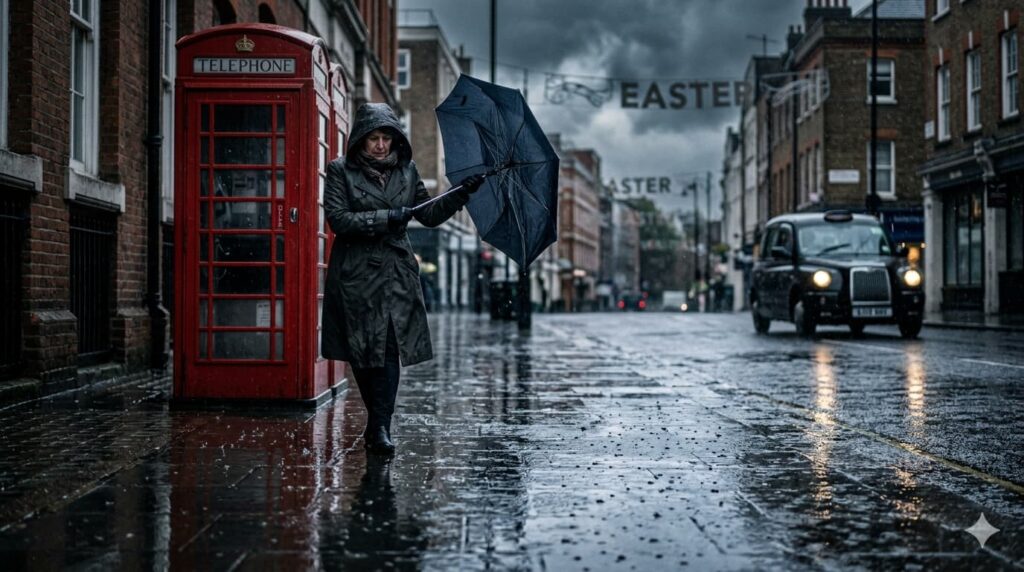
LONDON – The United Kingdom’s Easter Sunday celebrations have been dampened as Storm Dave sweeps across the British Isles, bringing a mix of heavy rain, gale-force winds, and significant travel disruption. On April 5, 2026, the Met Office extended several yellow weather warnings, urging travelers to reconsider non-essential journeys as the storm peaks across Northern Ireland, Scotland, and Northern England. This event has been dubbed Storm Dave UK 2026.
The storm, which made landfall late Saturday, has already left thousands of homes without power and forced airlines to ground flights at major regional hubs.
This chaos highlights the severity of torm Dave UK 2026 and its impact on daily life.
As the storm continues, the impact of torm Dave UK 2026 is expected to be felt for days.
Key Highlights
- Power Grid Impact: Over 2,000 households in Northern Ireland experienced blackouts; repair teams remain on high alert in County Armagh and County Down.
- Aviation Alerts: Loganair and other regional carriers have issued “Disruption Policies,” with potential cancellations at Manchester, Liverpool, and all Scottish airports.
- Cold Snap: Temperatures have plummeted to between 6°C and 10°C, significantly below the seasonal average for early April.
- Flood Risk: The Environment Agency has issued 15 local flood alerts across the North West as river levels rise due to sustained rainfall.
Storm Dave Hits Northern Ireland Hard
The brunt of the storm’s initial force was felt in Northern Ireland. According to Northern Ireland Electricity (NIE), the wind speeds reached peaks that downed power lines in Newtownhamilton and Seaforde. While engineers worked through the night to restore electricity to the majority of affected homes, the breezy and unstable conditions continue to hamper long-term repairs.
Local residents have been advised to secure garden furniture and avoid coastal paths where “overtopping” waves pose a significant safety risk. The unsettled weather is expected to persist through the remainder of the Easter bank holiday weekend.
Travel Gridlock: Flights and Ferries Affected
For those planning to visit family this Easter, the timing of Storm Dave could not be worse. Loganair confirmed that standby crews are in place, but warned that Manchester (MAN), Liverpool (LPL), and Newcastle (NCL) are currently within the “disruption zone.” Passengers have been told they can re-book alternative flights within the next 14 days without change fees.
Ferry services across the Irish Sea have also faced delays, with several morning crossings between Belfast and Cairnryan cancelled due to high sea states. Travelers are being urged to check “Manage My Booking” portals before heading to terminals.
A Chilly Outlook for the Easter Break
Beyond the wind and rain, the “St. Jude-like” intensity of Storm Dave has brought an unseasonable chill to the UK. While early spring usually sees the first signs of consistent warmth, the April 5 forecast remains dominated by cloudy skies and a biting wind chill.
Met Office meteorologists indicate that while the center of the storm will move toward Scandinavia by Monday, a trail of frequent showers will remain. “This isn’t the typical spring sunshine we hope for at Easter,” noted a Met Office spokesperson. “Unstable air masses coming off the Atlantic are keeping temperatures firmly in the single digits for much of the north.”
Impact Analysis
1. Infrastructure Vulnerability
The power outages in Northern Ireland highlight ongoing concerns regarding the resilience of the UK’s regional power grids during extreme weather events. The rapid response from NIE has been praised, but the incident serves as a reminder of the challenges posed by increasingly frequent “named storms.”
2. Economic Toll on Tourism
Easter is a critical period for the UK’s domestic tourism and hospitality sectors. With outdoor events cancelled and travel hindered, coastal resorts and regional attractions are likely to see a dip in projected revenue for the first quarter of 2026.
3. Policy and Preparedness
The widespread adoption of “flexible re-booking” by airlines like Loganair shows an evolution in passenger rights management. By offering fee-free changes proactively, carriers are reducing the chaos traditionally seen at airport terminals during weather emergencies.