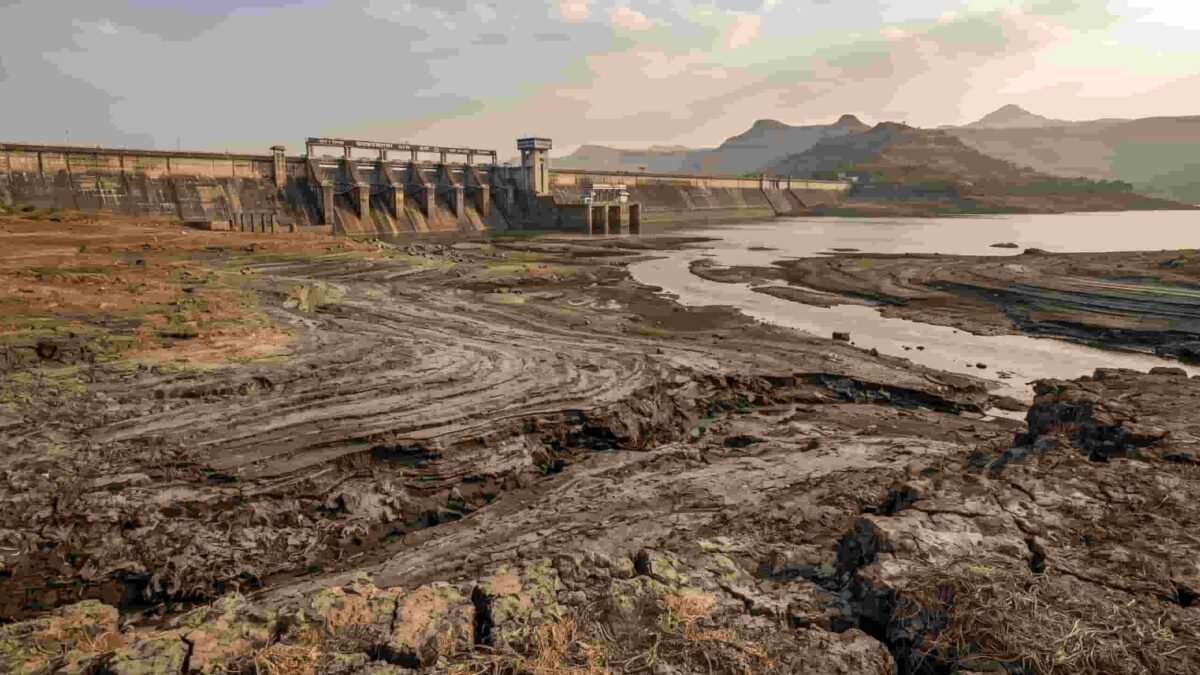
PUNE — As urban expansion rapidly reshapes the contours of Maharashtra’s cultural capital, a quiet crisis is brewing beneath the surface of its primary lifelines. The historic Khadakwasla Dam, which anchors the daily water security of Pune city and its surrounding areas, has lost more than half of its original storage capacity due to decades of heavy silt accumulation.
The alarming decline was officially brought to the floor of the Parliament by Rajya Sabha Member Dr. Medha Kulkarni, who flagged the issue as a critical long-term vulnerability for the region.
The Shrinking Reservoir: By the Numbers
Constructed decades ago to cater to a much smaller regional footprint, the Khadakwasla reservoir’s health has steadily deteriorated under the weight of ecological neglect:
- Original Capacity: Approximately 3.75 TMC (Thousand Million Cubic Feet).
- Current Capacity: Plummeted to nearly 1.75 TMC due to relentless silt deposition over the years.
- The Core Danger: With over 50% of its water-holding capacity compromised, the dam’s buffer against irregular monsoons and dry spells has drastically shrunk.
A Looming Threat Amid Rapid Urbanization
Pune is one of the fastest-growing metropolitan regions in the country, witnessing massive infrastructural booms, extensive real estate development, and surging population influxes across corridors like Hinjawadi, the outer expansion belts, and central municipal limits.
However, civic planners point out that civic infrastructure is struggling to keep pace with ecological capacities. While the Khadakwasla cluster (including Panshet, Varasgaon, and Temghar) collectively manages regional supplies, the foundational silt choke in Khadakwasla proper means the system hits critical deficit thresholds much faster during periods of low or delayed rainfall.
“Considering Pune’s growing population, rapid urbanisation, and increasing water requirements in the future, this decline in storage capacity is a serious concern for the city’s long-term water security,” highlighted Dr. Kulkarni during her address in the House.
The Road Ahead: What Needs to Be Done?
Addressing the Upper House, the Parliamentarian strongly urged the Central Government to intervene proactively by issuing necessary directives and financial backing for structural rehabilitation. The proposed multi-pronged blueprint includes:
- Scientific Desilting: Deploying modern mechanical dredging and sediment-removal technologies to safely extract accumulated silt without harming the dam’s structural integrity.
- Watershed Restoration: Rejuvenating upstream catchment zones to drastically reduce soil erosion and check the continuous flow of debris into the reservoir.
- Effective Silt Management: Establishing long-term deposition policies to ensure cleared basins do not revert to choked states.
- Reservoir Modernization: Upgrading gate mechanisms, monitoring systems, and structural reinforcements to optimize overall water retention.
As Pune races toward an increasingly water-intensive future, experts emphasize that addressing the Khadakwasla silt crisis is no longer optional—it is an absolute prerequisite to prevent future urban drought conditions.