| Key Highlights | Details |
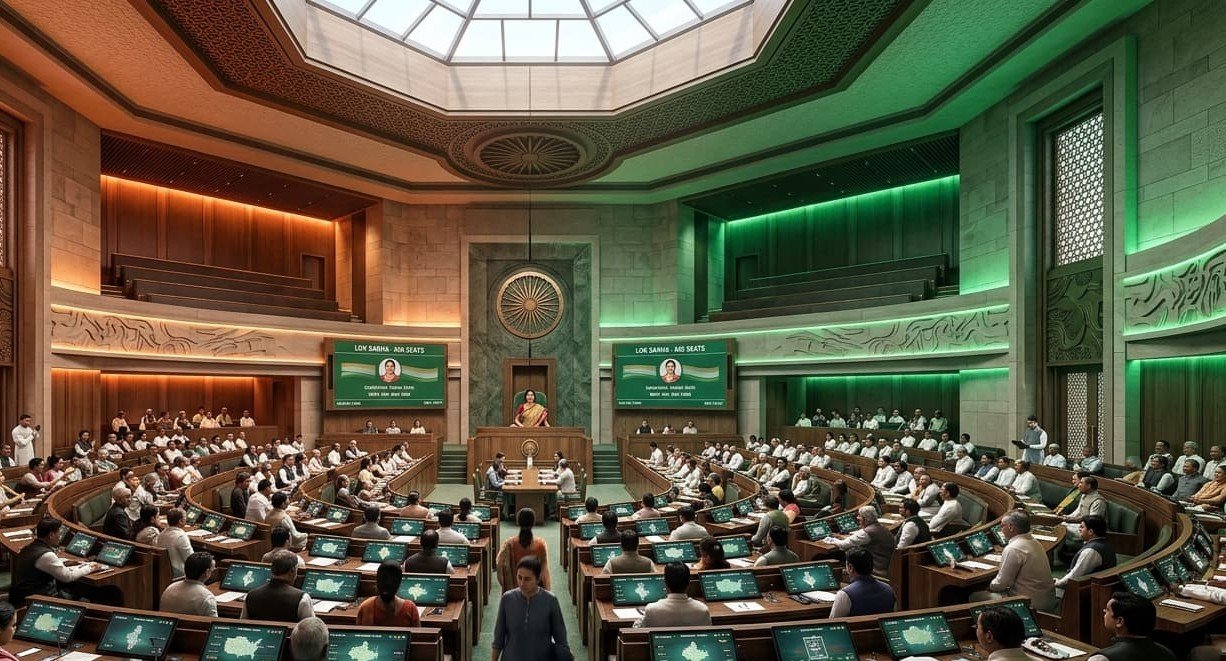
| Expansion Plan | Lok Sabha seats may increase from 543 to 850 for Women’s Quota. |
| South Alarm | Stalin and Revanth Reddy warn of shrinking representation for the South. |
| Census Shift | Redistribution likely based on the 2011 Census data. |
| Deadline | Move aimed at “operationalizing” reservation before 2029 polls. |
The big shift here is the looming redrawing of India’s political map, which has sent shockwaves from Chennai to Hyderabad. While the Centre frames the expansion to 850 seats as a mechanical necessity to implement the 33% women’s reservation, the ground reality is a deepening “federal friction.” Southern states, which successfully stabilized their populations over decades, now fear being “punished” with fewer seats compared to the high-growth Northern belt.
Ground Report: Southern CMs Unite Against “Political Dilution”
The mood in the South is one of fierce resistance. Tamil Nadu CM M.K. Stalin and Telangana CM Revanth Reddy have both raised a red flag, calling the move a “final warning” to India’s federal structure. In local tea stalls and city squares across Bengaluru and Kochi, the talk is about whether the “South’s success” in education and family planning is now becoming its biggest political liability. There is a palpable sense that the voice of a Lakh voters in the South will soon carry less weight than a similar number in the North.
Background: The 2011 Census Controversy
For decades, the number of Lok Sabha seats was frozen to protect states that implemented population control. However, to accommodate the new Women’s Reservation Act (Nari Shakti Vandan Adhiniyam), a fresh delimitation exercise is mandatory. The Centre’s proposal to use the 2011 Census as the base—and eventually the next published census—is the friction point. Projections suggest that Northern states like UP and Bihar could gain Crores of new representation units, while the South’s share could significantly shrink in proportion.
Public Buzz: #SouthTaxStrike and #SaveFederalism
Social media is currently a battlefield of hashtags. #SaveFederalism is trending as activists argue that a “one size fits all” delimitation will lead to a “majoritarian dominance.” Simultaneously, many are questioning the logic of linking women’s empowerment to a total seat overhaul. Among the middle class, there’s also confusion: will a larger Parliament of 850 MPs mean better governance, or just more expenditure from the taxpayer’s Crores?
Expert Verdict
“Redistributing seats based on population alone, without a ‘performance weightage’ for states that met national goals, could permanently alter the North-South balance. We need a ‘Hybrid Model’—as suggested by some leaders—to ensure equity.” — Dr. S. Krishnan, Constitutional Expert.
Impact Analysis
- Political: A potential 300+ seat jump in the Lok Sabha will require a massive logistical overhaul of the New Parliament House.
- Economic: The cost of managing 850 constituencies will run into Thousands of Crores annually in salaries and development funds.
- Regional: Could lead to a “Representation Crisis” where Southern states feel alienated from central decision-making.