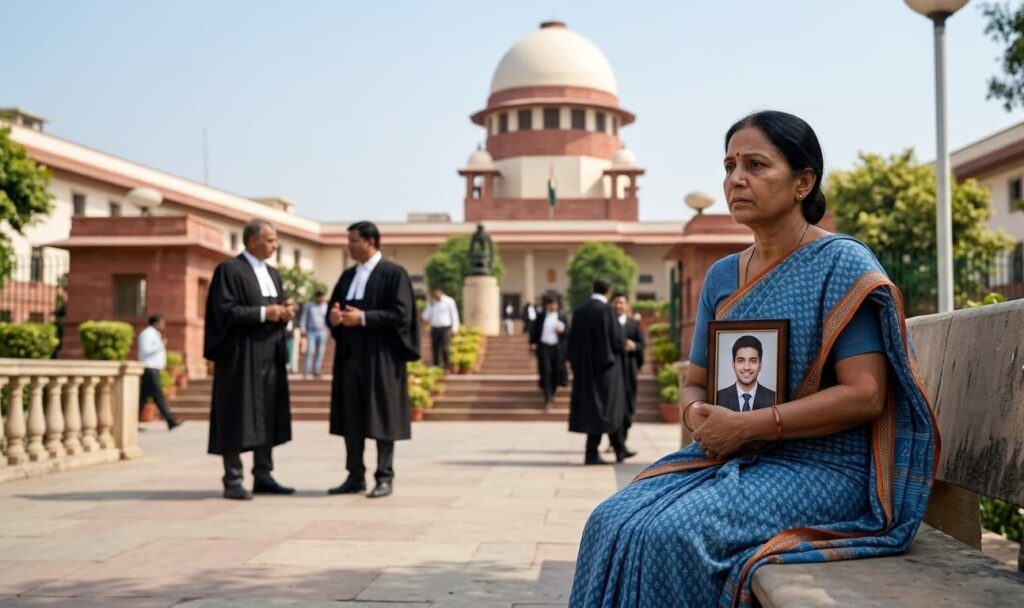
New Delhi, April 10, 2026 — The Supreme Court of India today took a stern stance on reports of Indian nationals being “unwillingly” conscripted into the Russian Army. A three-judge Bench, led by Chief Justice of India Surya Kant, characterized the situation as potentially involving a “human trafficking” angle, demanding immediate clarification from the Union Government regarding the safety and repatriation of those stuck in the conflict zone.
Key Highlights
- Judicial Intervention: SC hears plea for 26 Indians allegedly forced to fight in Ukraine.
- Trafficking Concerns: Chief Justice Surya Kant notes a “human trafficking” angle in recruitment.
- Government Action: Solicitor General Tushar Mehta asked to obtain details from the MEA.
- Grim Statistics: MEA data suggests 26 Indians have been killed in the conflict so far.
Supreme Court Blasts “Illegal Overseas Recruitment” Rackets
The apex court’s intervention follows a harrowing petition filed on behalf of 26 Indian citizens who claim they were lured to Russia under the pretext of lucrative “helper” jobs, only to have their passports seized and be sent to the frontlines. The Bench, including Justices Joymalya Bagchi and Vipul M. Pancholi, expressed “grave concern” over how gullible youth are being exploited.
“We are in an extreme situation. God knows what is happening and what is the truth,” Chief Justice Kant remarked, highlighting the desperation of families who haven’t heard from their kin in over 50 days. The court has directed the Solicitor General to coordinate with the Ministry of External Affairs (MEA) to ascertain the legal status and whereabouts of the named individuals.
The Modus Operandi of Recruitment Fraud
The petition details a sophisticated network of agents operating across Rajasthan, Haryana, Punjab, and Himachal Pradesh. These agents reportedly promise high-paying roles in the Russian hospitality or logistics sectors. However, upon arrival in Moscow, the recruits are allegedly forced to sign contracts in Russian—a language they do not understand—and are subsequently transported to military training camps.
Legal counsel for the petitioners argued that despite multiple complaints, local law enforcement has been slow to register FIRs against these agents, allowing the “business of trafficking” to continue unabated. The Supreme Court has now sought a comprehensive report on the steps taken under the Indian Community Welfare Fund (ICWF) to provide legal and humanitarian support to these citizens.
Diplomatic Tightrope Amidst Rising Casualty Counts
This judicial pressure comes at a sensitive time for Indo-Russian relations. While New Delhi has maintained a nuanced diplomatic stance on the Ukraine conflict, the rising toll of Indian casualties has sparked domestic outrage. According to recent MEA submissions in the Rajya Sabha, at least 202 Indians were recruited into the Russian Army, with 26 confirmed deaths and several others missing.
The Indian government has already called on Moscow to stop the practice of recruiting Indian nationals and to ensure the early discharge of those currently serving. However, the Supreme Court’s demand for the “MADAD” (MEA in Aid of Diaspora in Distress) files indicates that the judiciary is looking for more than just diplomatic assurances—it wants a concrete roadmap for repatriation.
Impact Analysis
| Stakeholder | Nature of Impact | Expected Outcome |
|---|---|---|
| Affected Families | Emotional/Legal | Renewed hope for the safe return of kin and legal action against local agents. |
| MEA & Diplomacy | Strategic | Increased pressure on Moscow to honor discharge requests for foreign recruits. |
| Recruitment Agencies | Regulatory | Likely nationwide crackdown on “fly-by-night” overseas job consultants. |
| Indian Youth | Awareness | Heightened vigilance regarding “too good to be true” job offers in conflict zones. |