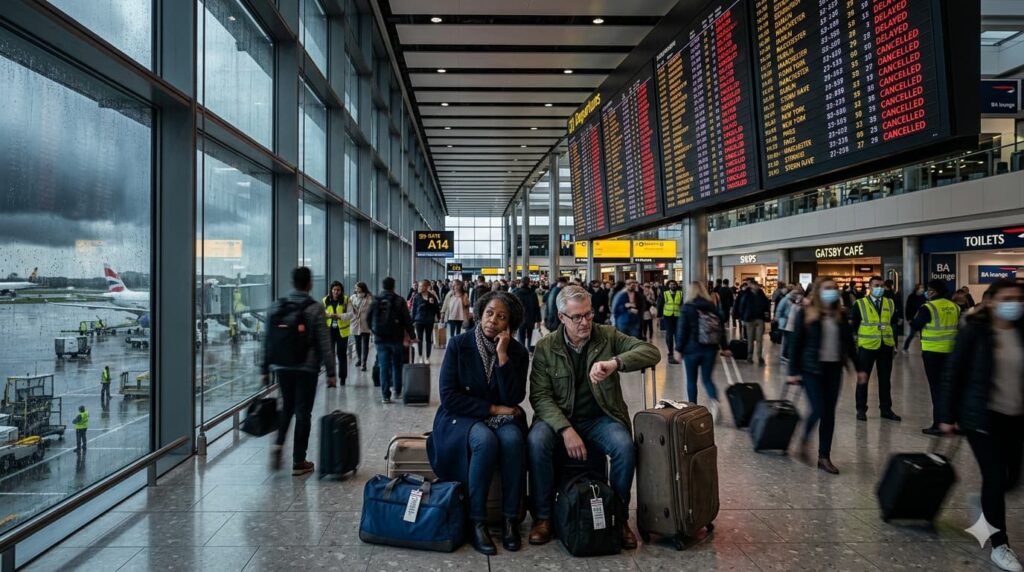
London, 6 April 2026 – The UK faces a dual-front challenge this Easter Monday as a landmark overhaul of the national welfare system comes into force alongside the lingering travel devastation of Storm Dave. With the Department for Work and Pensions (DWP) launching reforms aimed at saving the taxpayer £1 billion, and thousands of holidaymakers stranded at major hubs like Heathrow and Edinburgh, the day marks a significant inflection point for both the British economy and its infrastructure.
Key Highlights
- Welfare Reform: New Universal Credit health element rates of £217.26 per month for new claimants take effect today.
- Employment Push: A £3.5 billion investment package aims to move 300,000 disabled or long-term sick individuals back into work.
- Storm Dave Aftermath: Over 800 flight disruptions recorded across the UK and Ireland, with Heathrow seeing 168 delays.
- Cost of Living: Despite reforms, standard Universal Credit rates rise by an average of £295 per year to combat inflation.
DWP Reform: The “Work-First” Strategy Begins
The most significant legislative shift today is the implementation of the government’s welfare reform package. Designed to “tackle perverse incentives,” the new rules reduce the monthly health-related payment for new claimants from £429.80 to £217.26. The Minister for Social Security and Disability, Sir Stephen Timms, stated that the previous system “locked people out of work.”
The government is betting heavily on the Connect to Work and WorkWell programmes, which together represent a £3.5 billion investment. These schemes are intended to provide personalised, voluntary support to 550,000 people over the next five years. While the government highlights a £1 billion saving for the Treasury, advocacy groups have voiced concerns that the lower rates may exacerbate the “cost of survival” for vulnerable families during a period of sustained economic pressure.
Storm Dave: Aviation Recovery and Easter Gridlock
While the DWP focused on the future of the workforce, the present reality for many Britons was a battle with the elements. Storm Dave, the fourth named storm of the season, has proved particularly destructive due to its slow-moving nature. Tracking at just 15–20 km/h, the system lingered over the UK for 30 hours, causing what experts call a “significant aviation collapse.”
Heathrow and Manchester airports bore the brunt of the “knock-on” effect. Although the storm began to clear northeastward overnight, the displacement of crews and aircraft left thousands of families stranded at the end of the Easter break. EU 261/2004 regulations—the gold standard for passenger rights—are being cited across travel desks, though many airlines are categorizing the event as “extraordinary circumstances,” limiting their liability for compensation.
Pensioners Receive Triple Lock Boost
In a move to balance the controversial welfare cuts, more than 12 million pensioners saw their State Pension rise today by 4.8%. Under the Triple Lock guarantee, the basic and new State Pensions have increased by up to £575 per year. The Prime Minister reinforced this move, stating that despite “global uncertainty,” the government remains on the side of workers and pensioners.
Impact Analysis
The convergence of these events highlights a tightening of the UK’s fiscal belt alongside a vulnerable transport infrastructure.
- Economic Impact: The welfare reforms aim for long-term fiscal sustainability, but the immediate reduction in claimant income could reduce local spending power in lower-income regions.
- Social Impact: The transition from “benefits to work” relies entirely on the success of the WorkWell programme. If the jobs market does not accommodate disabled workers, the “safety net” may feel more like a tightrope.
- Infrastructure: Storm Dave has exposed the fragility of UK aviation scheduling during peak seasons. The reliance on “hub-and-spoke” models meant that delays in Dublin and Edinburgh effectively crippled the London network for over 24 hours.