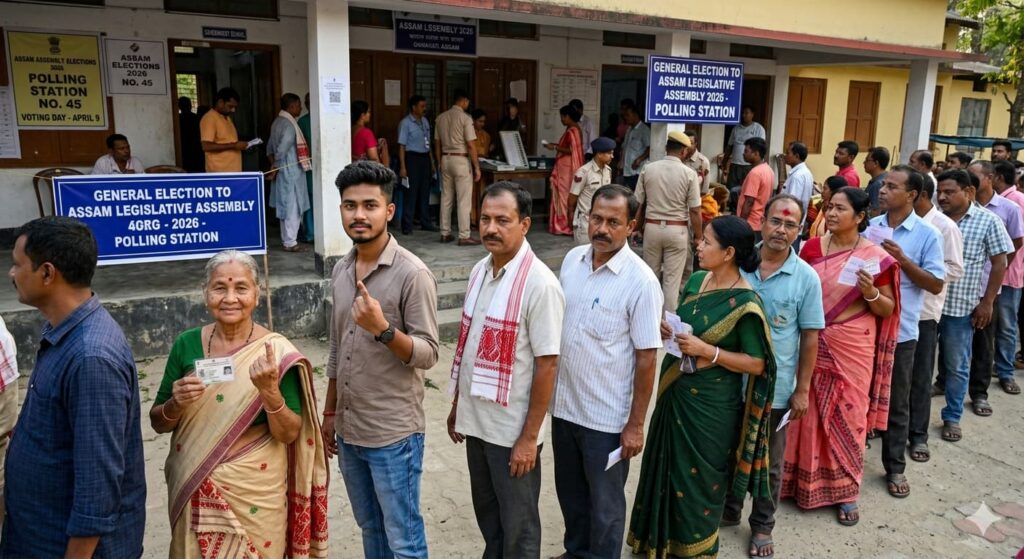
New Delhi | April 9, 2026 As the heat of April settles over the Indian subcontinent, the political climate is reaching a boiling point. Today marks a pivotal moment in the 2026 electoral calendar as voters in Assam, Kerala, and Puducherry head to the polls. This “Mini-General Election” is not just a test of local governance but a referendum on the shifting strategies of India’s major political behemoths.
1. The Battleground States: April 9 Polling
Today’s single-phase voting across three regions offers a snapshot of the fractured yet fiercely competitive nature of modern Indian democracy.
- Assam: Chief Minister Himanta Biswa Sarma is seeking a third consecutive term for the BJP. The campaign has been dominated by debates over the National Register of Citizens (NRC) and Assamese identity, while a rejuvenated Congress-led alliance attempts to tap into anti-incumbency sentiments.
- Kerala: A classic ideological clash continues. The CPI(M)-led Left Democratic Front (LDF) is fighting to retain its historic hold against the Congress-led United Democratic Front (UDF). Interestingly, observers are watching if the BJP-led NDA can finally make a significant dent in a state where it has traditionally struggled for assembly seats.
- Puducherry: Polling for 30 seats is underway to decide if the AINRC-BJP coalition will maintain its grip on the Union Territory.
2. The Great Census of 2026
Beyond the ballot box, the most significant administrative move this year is the launch of the world’s largest digital census. Delayed for five years, this census introduces a transformative element: caste enumeration.
“This is a $1.24 billion exercise involving three million officials. For the first time in a century, the data collected will provide a granular look at India’s social fabric through a caste lens.”
The first phase, focusing on house listing, began on April 1. The inclusion of caste data is expected to redefine reservation policies and social welfare targeting for the next decade, making it a “political atom bomb” that both the ruling party and the opposition are handling with extreme caution.
3. Structural Shifts in Governance
The 2026-27 Union Budget has introduced several measures that signal a “business-first” political philosophy:
- Decriminalization of Minor Defaults: A move to reduce “compliance-stress” by converting technical tax penalties into simple fees.
- MGNREGA Transformation: The flagship rural employment scheme is undergoing a decisive shift, with more financial burden moving from the Center to the States—a move that has sparked debate among federalist proponents.
- Senior Citizen Healthcare: The expansion of Ayushman Bharat to include all citizens aged 70 and above, regardless of income, marks a significant tilt toward universal social security ahead of upcoming elections in West Bengal and Tamil Nadu.
4. Geopolitical Ripples
The domestic political narrative is also being shaped by India’s cooling relations with the U.S. and an evolving regional security landscape following the brief escalation with Pakistan in 2025. Prime Minister Modi’s “Viksit Bharat” (Developed India) pitch now balances domestic manufacturing goals with a more complex diplomatic tightrope walk.
Summary Table: Key Elections 2026
| State / UT | Key Issue | Current Leadership |
| Assam | NRC & Identity | BJP (Himanta Biswa Sarma) |
| Kerala | Welfare vs. Ideology | LDF (Pinarayi Vijayan) |
| Tamil Nadu | State Autonomy vs. Hindutva | DMK (M.K. Stalin) |
| West Bengal | Governance & Infiltration | TMC (Mamata Banerjee) |