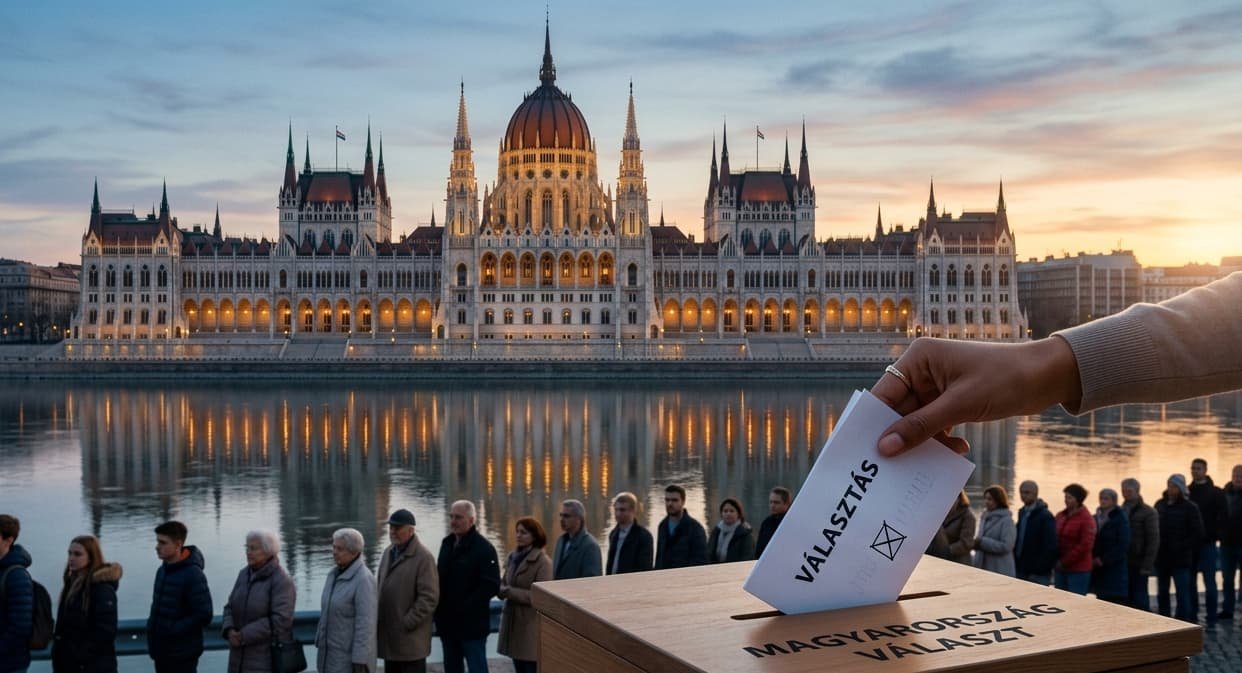
BUDAPEST, April 12, 2026 — The eyes of the entire European continent are fixed on Budapest today as Hungary heads to the polls for its most consequential election since the fall of Communism. After 16 years of dominant rule, Prime Minister Viktor Orbán is facing a political “perfect storm” that could fundamentally shift the balance of power in Central Europe.
The central figure in this upheaval is Péter Magyar, a former government insider turned whistleblower. His meteoric rise has galvanized a previously fractured opposition, drawing hundreds of thousands to the streets of Budapest over the last month. For the first time since 2010, exit polls suggest the race is too close to call.
Key Highlights
- The High-Stakes Vote: Parliamentary polls opened across Hungary at 6:00 AM today (April 12, 2026), with record-breaking early turnout reported.
- The Challenger: Political newcomer Péter Magyar and his Tisza Party are leading a massive movement to end Viktor Orbán’s nearly two-decade-long grip on power.
- The Russia Factor: The election is seen as a referendum on Hungary’s “neutral” stance toward the Kremlin and its continued blocking of EU aid to Ukraine.
- Global Influence: U.S. political figures, including VP JD Vance, have closely monitored the campaign, highlighting the divide between nationalist and pro-EU ideologies.
- The ‘Veto Power’ at Stake
For Brussels, the stakes couldn’t be higher. Hungary has long been the “rebel child” of the European Union, frequently using its veto power to stall sanctions against Russia and military aid for Kyiv. If Orbán is unseated, the EU could see a more unified front against Moscow, potentially accelerating Ukraine’s path toward European integration.
Accusations of Foreign Interference
The final days of the campaign were marred by controversy. The Orbán government has accused “Brussels bureaucrats” and Western digital platforms of manipulating the information flow to favor the opposition. Conversely, the opposition has raised alarms over the fairness of the state-controlled media landscape, calling it a “David vs. Goliath” battle for democracy.
Economic Anxiety and the Fuel Crisis
Beyond high-level geopolitics, the average Hungarian voter is concerned about the wallet. Rising energy costs—exacerbated by ongoing Middle Eastern tensions—have hit the agrarian heartland hard. While Orbán has campaigned on “Peace and Cheap Gas,” the opposition has successfully framed the crisis as a failure of the current administration’s “pro-Russia energy dependency.”
I