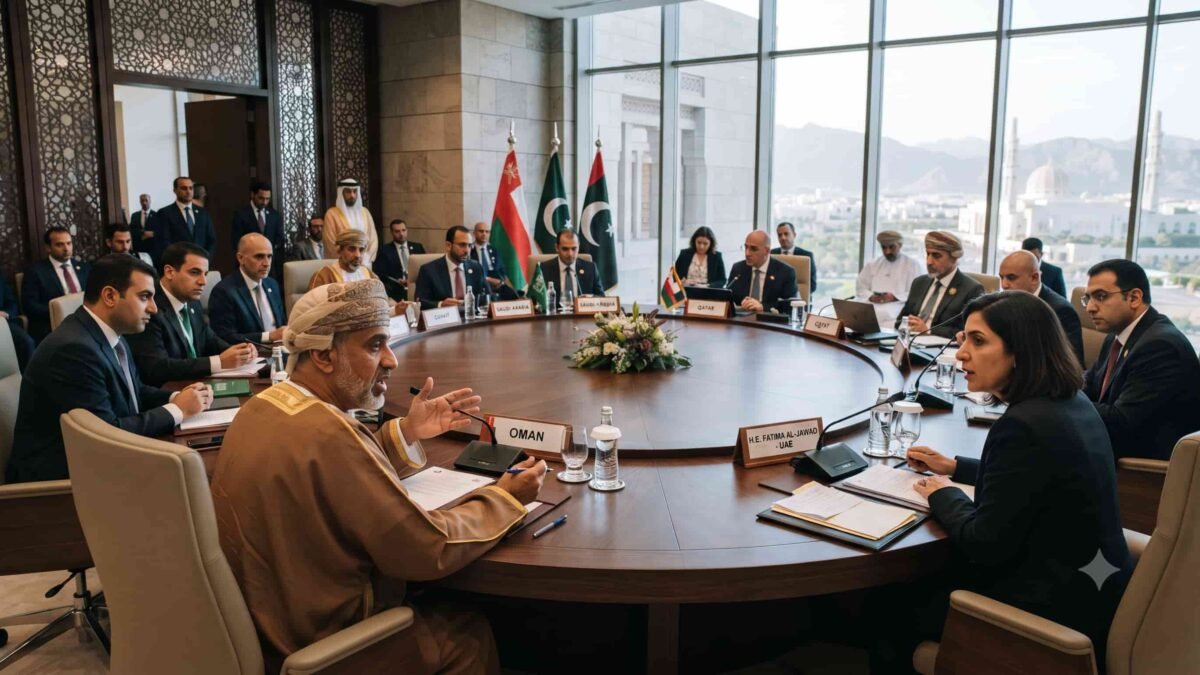
Regional administrations urge a diplomatic resolution in West Asia as backchannel negotiations target comprehensive maritime and trade accommodations.
By DW Pulse | — August 6, 2026 — Several Gulf Cooperation Council member states have intensified diplomatic appeals to Washington, advocating for sustained political dialogue with Tehran to de-escalate ongoing regional tensions. The diplomatic push coincides with advanced technical discussions concerning commercial shipping safety and economic corridor protections across the Persian Gulf.
Key Highlights
- Gulf state governments formally urge the United States administration to prioritize diplomatic channels over military escalation.
- High-level consultations focus on establishing institutional frameworks to safeguard vital regional shipping lanes.
- Regional capitals emphasize that long-term economic stability relies on multilateral security guarantees and trade normalization.
Diplomatic Mediation and Regional Posture
Middle Eastern intermediaries have played a pivotal role in maintaining open communication lines between Washington and Tehran, focusing primarily on logistical safety and risk mitigation. Senior officials across the region maintain that constructive political engagement remains the most viable path to prevent secondary supply chain shocks and secure infrastructure across West Asia.
[Read Also: Iran and Oman reach an agreement on a shipping route through the Strait of Hormuz]
Strategic Realignment in International Forums
The ongoing diplomatic momentum reflects a broader strategic recalibration among regional stakeholders, who are increasingly favoring cooperative security architectures over adversarial postures. Multilateral forums continue to evaluate enforcement mechanisms to ensure that any prospective de-escalation framework addresses both sovereign security requirements and commercial trade continuity.