As the UK wakes up this Wednesday, the atmosphere in the City is one of cautious tension. Global markets have been jittery following the overnight release of the International Monetary Fund’s (IMF) spring report, which places Britain at the centre of a brewing economic storm. While the spring sunshine suggests a turn of the season, the fiscal forecast remains decidedly chilly. Chancellor Jeremy Hunt is expected to address the Commons later today, but the narrative has already been set by Washington: the UK is navigating a particularly narrow path to recovery compared to its G7 peers.
Key Highlights
- IMF Forecast: UK growth slashed to 0.8% for 2026, the lowest among advanced economies.
- Energy Crisis: Britain named “most vulnerable” to global energy shocks following Middle East escalations.
- Inflation Spike: Domestic inflation set to hit a “temporary” peak of 4% this year.
- Glimmer of Hope: The Automobile Club of Britain (ACB) predicts a “modest drop” in fuel prices next week due to a temporary ceasefire.
A Bitter Pill for the British Economy
The International Monetary Fund (IMF) has delivered a sobering mid-week wake-up call to Downing Street, branding the United Kingdom as the advanced economy most at risk from the ongoing volatility in global energy markets. In its latest World Economic Outlook released today, 15 April 2026, the IMF downgraded the UK’s growth forecast for the year from a hopeful 1.3% to a sluggish 0.8%.
For the average Brit, this isn’t just a spreadsheet adjustment—it’s a direct hit to the wallet. While the United States and Europe have seen their forecasts trimmed, the UK’s unique reliance on gas imports and a “stubborn” labour market have left it exposed. We aren’t just feeling the pinch; we’re feeling the full squeeze.
Petrol Station Pain and the ‘Ceasefire’ Discount
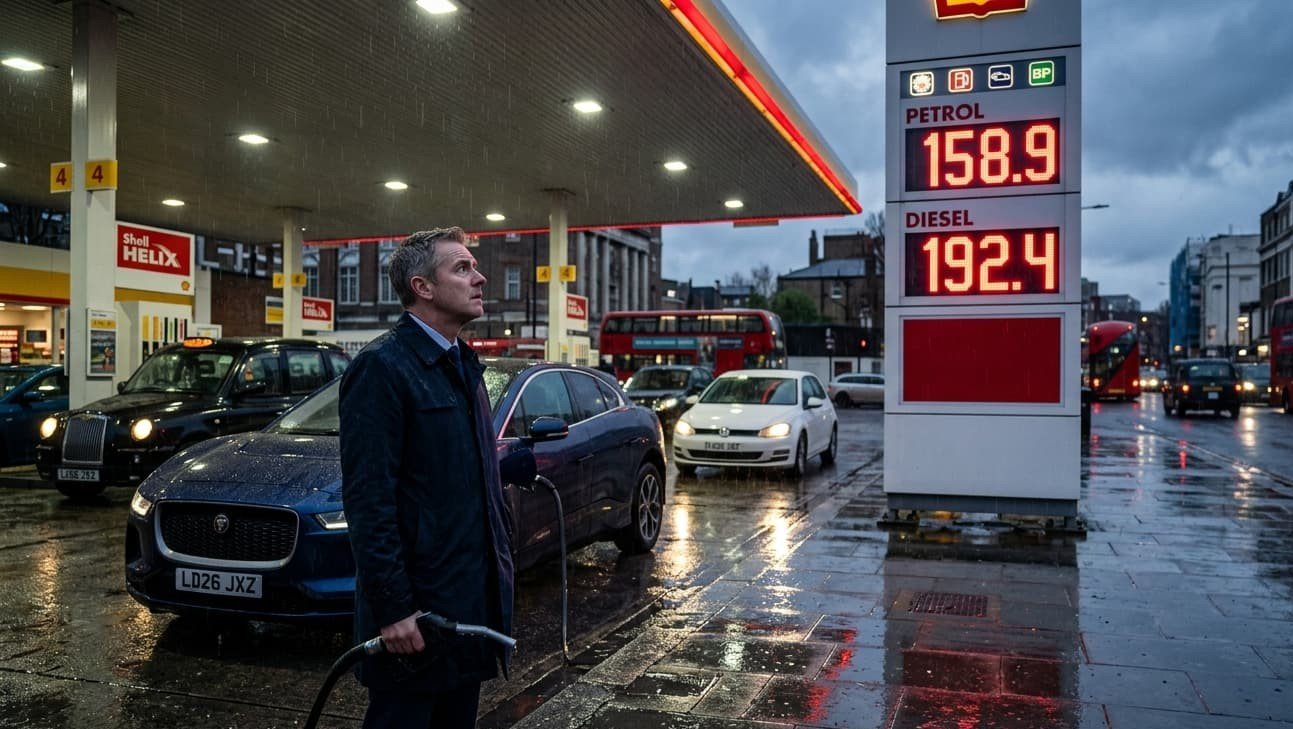
The backdrop to this economic gloom is the sharp rise in costs at the forecourt. Since the outbreak of conflict between the US and Iran earlier this spring, petrol prices have jumped from 133p in February to a staggering average of 158p per litre today. Diesel has fared even worse, now sitting at 192p.
However, there is a small mercy on the horizon. The Automobile Club of Britain (ACB) noted this afternoon that a temporary ceasefire in the Middle East has finally filtered through to wholesale markets. Simon Williams, the ACB’s head of policy, suggests we might see prices drop by “several pence” within the next fortnight. “It’s a start,” one London commuter told us today while filling up, “but when you’re paying nearly two quid for diesel, a few pence feels like trying to put out a house fire with a water pistol.”
The Long Road to 2027 Recovery
Despite the immediate dread, the IMF’s report isn’t entirely devoid of optimism. If—and it is a significant ‘if’—energy prices stabilise, the UK is projected to become the fastest-growing economy in the G7 by 2027. The Bank of England’s 2% inflation target remains the “north star,” though the IMF warns that the path there is littered with obstacles, including a slower-than-expected pace of interest rate cuts.
The reality for the Chancellor today is a delicate balancing act: keeping the economy from sliding into a recession while managing an inflation rate that looks set to hover around 4% for the remainder of the year.
Impact Analysis
| Sector | Short-term Impact | Long-term Outlook |
| Households | High; rising utility and fuel bills squeezing disposable income. | Recovery expected by mid-2027 as inflation cools. |
| Manufacturing | Negative; high energy overheads slowing industrial output. | Transition to domestic renewables likely to accelerate. |
| Transport | Critical; logistics and haulage costs driving up food prices. | Potential for government subsidies if prices remain at 190p+. |