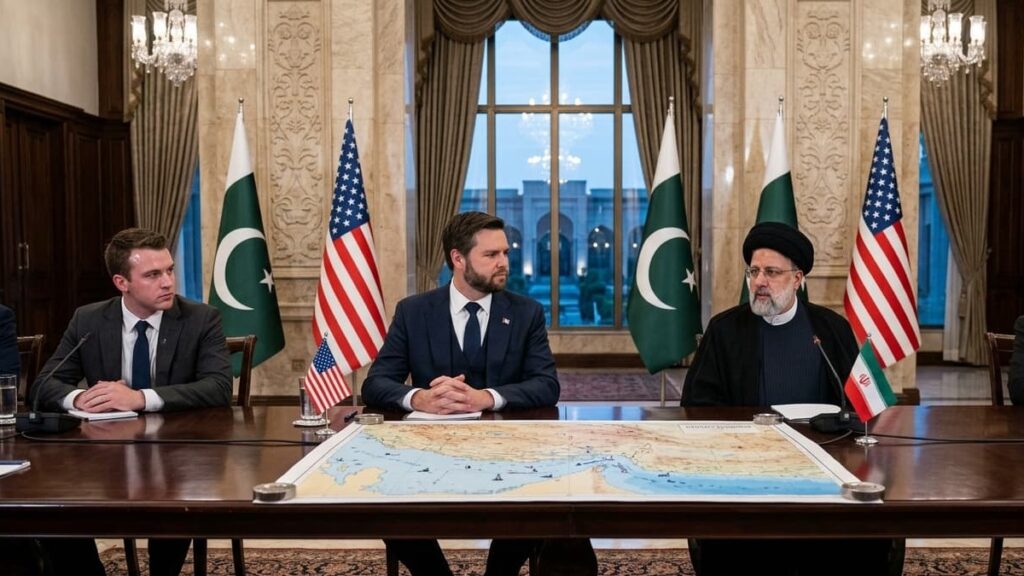
ISLAMABAD, Pakistan – The future of global energy markets and Middle Eastern stability hangs in the balance today as U.S. Vice President JD Vance touched down in the Pakistani capital. Tasked by President Trump to spearhead “make-or-break” negotiations, Vance is meeting face-to-face with top Iranian officials in a desperate bid to cement a fragile ceasefire and permanently end the six-week-old conflict that has crippled the Strait of Hormuz.
Key Highlights
- The Mission: Vice President JD Vance leads a high-profile delegation, including Jared Kushner, for direct talks with Iranian Parliamentary Speaker Mohammad Bagher Ghalibaf.
- Strait of Hormuz: President Trump has vowed to “clear” the vital shipping lane of sea mines, even as peace talks get underway in Islamabad.
- Tough Conditions: Tehran is demanding the unfreezing of assets and a verified ceasefire in Lebanon as a prerequisite for a lasting peace deal.
Diplomacy Under a Dark Cloud
While the world hopes for a diplomatic breakthrough, the atmosphere in Islamabad is thick with tension. The streets of the normally vibrant capital have been cleared by security forces to ensure the safety of the visiting dignitaries. This meeting marks the first high-level, in-person engagement since the war began, representing a pivot from kinetic military action to “hard-nosed diplomacy,” according to White House insiders.
The Trump administration has signaled it is willing to talk, but the President’s social media activity throughout the morning suggests the military option remains on the table. “We are now starting the process of clearing out the Strait of Hormuz,” the President posted, a move some analysts see as a “maximum pressure” tactic to force Iran’s hand at the negotiating table.
Energy Security and the Global Ripple Effect
The conflict has effectively throttled 20% of the world’s oil supply, sending gas prices in the United States to levels not seen in a decade. In American heartland states, tribal gas stations have become rare “oases” of relief, offering slightly lower prices, but the strain on the average American consumer is reaching a breaking point.
“The Islamabad talks aren’t just about borders or missiles; they’re about the price of a gallon of gas in Ohio,” said one senior economic advisor accompanying the Vice President. The U.S. delegation is expected to pitch a plan that would see American LNG (liquefied natural gas) and oil exports surge to fill the vacuum, provided a regional security guarantee can be reached.
The Lebanon Complication
A significant hurdle in the negotiations remains the escalating violence in Southern Lebanon. Iranian officials have stated clearly that no permanent deal can be reached while Israeli airstrikes continue to target Hezbollah positions. Conversely, the U.S. and Israel have maintained that the Lebanon campaign is a separate security matter.
Finding a middle ground on this “linked” conflict will be Vance’s primary challenge. Sources close to the talks suggest that a phased de-escalation—starting with a 30-day “quiet period”—is currently being floated by Pakistani mediators.
Impact Analysis
- Global Economy: A successful deal could see oil prices plummet by $20-30 per barrel overnight, providing an immediate “tax cut” to the global economy.
- U.S. Domestic Politics: For the Trump administration, a peace deal led by Vice President Vance would be a major win ahead of the mid-cycle legislative sessions, proving the “America First” diplomatic model.
- Regional Power Shift: Pakistan’s role as a mediator elevates its status as a key West Asian power broker, potentially shifting traditional alliances in the region.
- Maritime Security: The clearing of the Strait of Hormuz would restore confidence in global shipping lanes, though insurers may remain wary of “sleeper” sea mines for years.