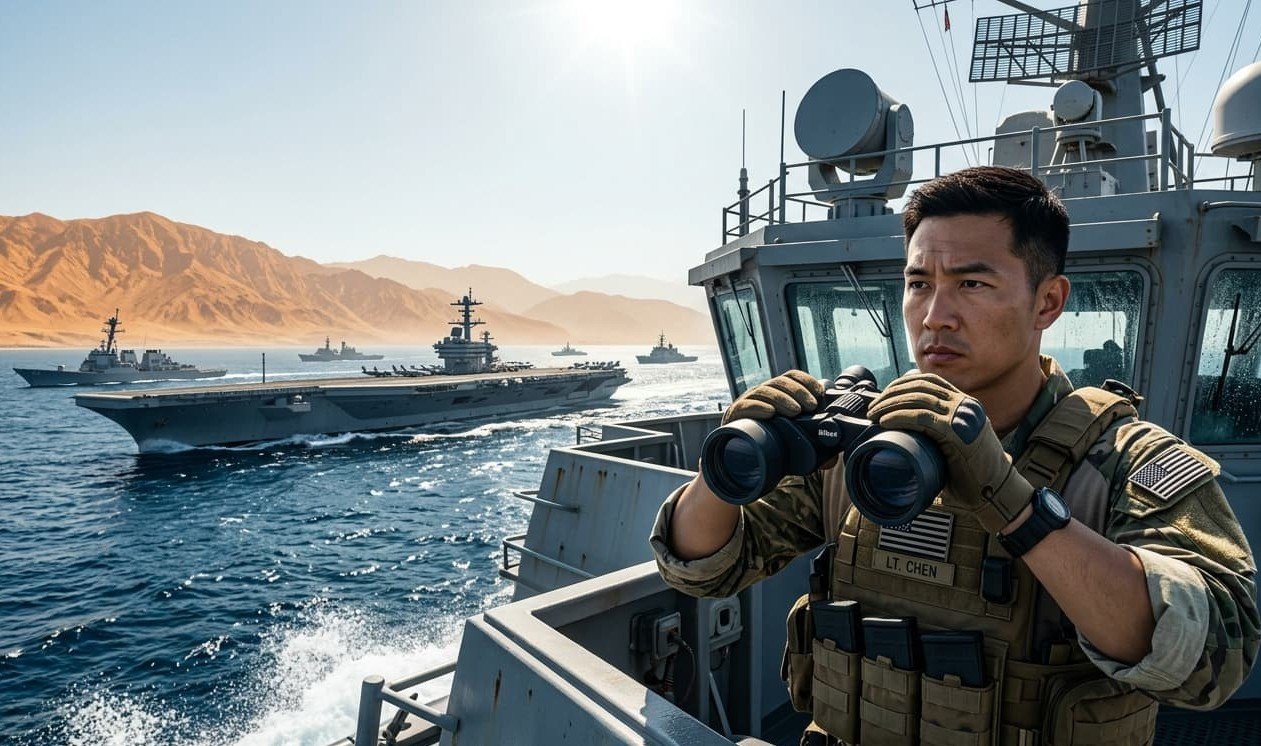
WASHINGTON, D.C. — In a move that has sent shockwaves through global energy markets and heightened international tensions, the United States has officially initiated an indefinite naval blockade of the Strait of Hormuz. Speaking from the Pentagon Thursday morning, Defense Secretary Pete Hegseth delivered a blunt ultimatum to Tehran: the U.S. is prepared to maintain its military stranglehold on the world’s most vital oil artery until American security demands are met.
“We are giving the Iranian regime a choice: the easy way or the hard way,” Hegseth told reporters, his tone echoing the “America First” muscularity that has defined the current administration’s foreign policy. “Their energy industry isn’t destroyed yet, but they should know we are watching. Threatening commercial ships isn’t control—it’s piracy. And we don’t negotiate with pirates.”
Key Highlights
- Pentagon Declaration: Defense Secretary Pete Hegseth confirms the U.S. Navy will maintain a blockade of the Strait of Hormuz “as long as it takes.”
- Diplomatic Breakdown: The move follows the collapse of high-level peace negotiations in Islamabad between U.S. and Iranian officials.
- Economic Tensions: Global oil markets react sharply as the U.S. warns it is “reloading with more power” to counter Iranian threats to commercial shipping.
- Presidential Stance: President Trump defends the “hard way” approach, citing the need to end “piracy” and secure global energy routes.
The Collapse of the Islamabad Dialogue
The blockade follows the spectacular failure of 21 hours of grueling peace talks in Islamabad, Pakistan, earlier this week. Despite hopes that a two-week ceasefire could be extended into a permanent roadmap for peace, negotiators emerged from the sessions with no agreement.
The sticking point remains the U.S. demand for a total cessation of Iranian-backed maritime interference and a rollback of regional proxy influences. With the diplomatic channel now effectively closed, the Trump administration has pivoted back to “maximum pressure” on a scale not seen since the initial conflicts of the mid-2020s.
Strategic Power Play in the Strait
The Strait of Hormuz, a narrow chokepoint between the Persian Gulf and the Gulf of Oman, sees roughly one-fifth of the world’s oil consumption pass through its waters daily. By deploying a blockade, the U.S. Navy isn’t just targeting Iranian exports; it is asserting total dominance over the transit of global energy.
Hegseth emphasized that the U.S. is “reloading with more power than before,” signaling that additional carrier strike groups are likely en route to the region. This aggressive posture has drawn sharp criticism from international leaders, including Pope Leo XIV, who, during a tour of Africa, decried leaders who “manipulate religion and the name of God for military and political gain”—a comment many interpreted as a direct swipe at the religious rhetoric often utilized by the Pentagon chief.
Domestic and Global Ripples
Domestically, the reaction has been polarized. While supporters of the President argue that the blockade is a necessary step to protect American interests and ensure long-term stability, critics in the Senate have voiced concerns over the lack of a formal war powers resolution. For the fourth time this month, the Senate failed to pass a resolution that would curb the President’s ability to engage in sustained combat operations without a fresh mandate.
As the U.S. Navy settles in for what could be a long winter in the Gulf, the world watches the price per barrel. If the blockade holds, and Iran retaliates with its own mine-laying or drone operations, the “hard way” Hegseth warned of may become the only reality for the foreseeable future.
Impact Analysis
- Energy Markets: Immediate spike in Brent Crude prices; potential for long-term global inflation if the blockade disrupts Asian and European supply chains.
- Geopolitical Alliances: Strains on U.S.-E.U. relations as European nations fear an escalation into a full-scale regional war.
- Military Logistics: A significant shift in U.S. naval assets from the Indo-Pacific to the Middle East, potentially leaving gaps in other strategic theaters.
- Internal U.S. Politics: Renewed debates over executive authority and the War Powers Act as the 2026 midterm cycle approaches.