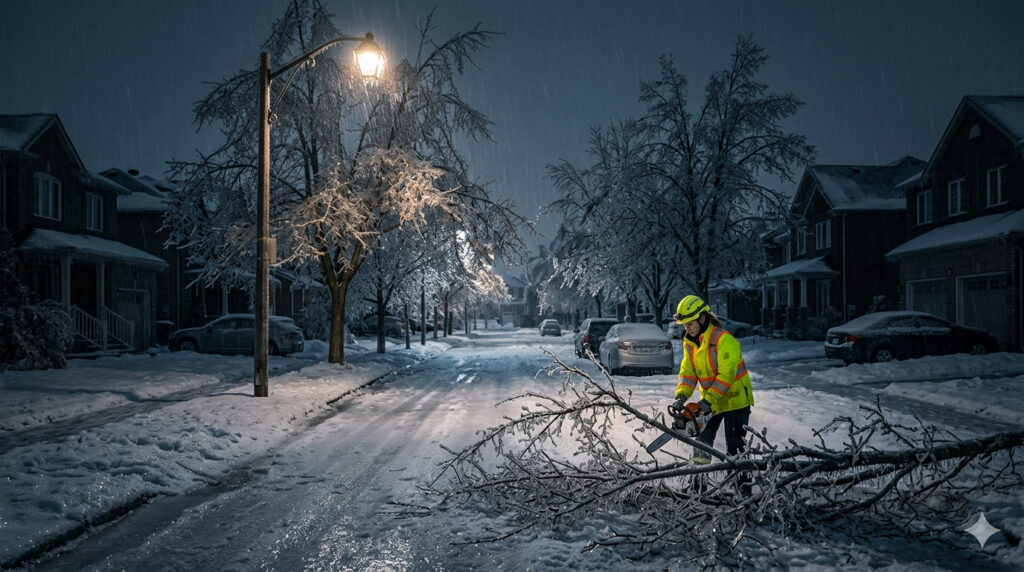
Spring Ice Storm Paralyzes Ontario and QuebecKey HighlightsWeather Alert: Over 400,000 residents are without power due to a severe “April Ice Storm.”Travel Chaos: Pearson International and Montréal-Trudeau airports have canceled over 300 flights.Casualties: Provincial police report two weather-related fatalities on Highway 401.Infrastructure: Hydro One warns that full restoration could take up to 72 hours in rural areas.Government Response: Premiers of Ontario and Quebec have activated emergency relief protocols.Freezing Rain and Infrastructure CollapseA massive low-pressure system moving from the U.S. Midwest has collided with a cold Arctic front over Central Canada, resulting in a devastating ice storm today, April 4, 2026. Freezing rain has coated trees and power lines in a thick layer of ice, leading to widespread infrastructure failure. In the Greater Toronto Area (GTA) and the Island of Montreal, the weight of the ice has caused hundreds of trees to snap, blocking residential streets and crushing parked vehicles. Utility companies, including Hydro-Québec and Hydro One, have deployed all available crews, but the ongoing freezing drizzle is making repair work extremely hazardous.Transportation Standstill: Air and Land Travel HitThe timing of the storm has created a nightmare for commuters and travelers. Canada’s busiest transit corridor, the 401, has seen dozens of multi-vehicle collisions, including a tragic jackknifed semi-trailer incident near Kingston. VIA Rail has suspended service between Toronto and Ottawa after downed branches damaged overhead catenary wires. Meanwhile, at the airports, thousands of passengers remain stranded as de-icing crews struggle to keep up with the rapid ice accumulation on aircraft wings. Transport Canada has advised all citizens to stay off the roads unless travel is absolutely essential.Climate Shift: The Rise of Volatile Spring ExtremesMeteorologists are noting that this 2026 storm is one of the most intense April weather events on record. Environmental scientists suggest that the increasing frequency of these “shoulder season” ice storms is a direct result of shifting atmospheric moisture patterns. As Lake Ontario and Lake Erie remain at record-high temperatures for this time of year, they provide more “fuel” for storms that would traditionally have been light snow or rain. This event serves as a stark reminder of the growing need for climate-resilient infrastructure in Canada’s urban centers.Impact AnalysisEconomic Cost: Early estimates suggest the storm could result in over $500 million in lost productivity and insurance claims due to property damage and business closures.Public Safety: The strain on emergency services (EMS and Fire) is at a breaking point, with response times in Montreal and Ottawa increasing significantly due to road conditions.Agriculture: Farmers in Southern Ontario are concerned about the “flash freeze” impact on early budding fruit trees, which could lead to a reduced harvest later this year.