KEY HIGHLIGHTS
- The Ban: Beijing signals a total halt on sulfuric acid exports starting May 1 to prioritize domestic fertilizer and “food security.”
- Tech Titan Move: BYD officially launches the 2026 “Seal” in Europe, pivoting to LFP “Blade” batteries to bypass cobalt supply shocks.
- The Cost: Global copper and nickel prices surge as acid-leaching mines in Congo and Indonesia face a “commercial drought.”
- Trade War: U.S. slaps a final 85% tariff on Chinese MDI (chemicals), deepening the “decoupling” of high-end manufacturing.
Bottom line: Beijing is playing the “Commodity Card” to shield its own.
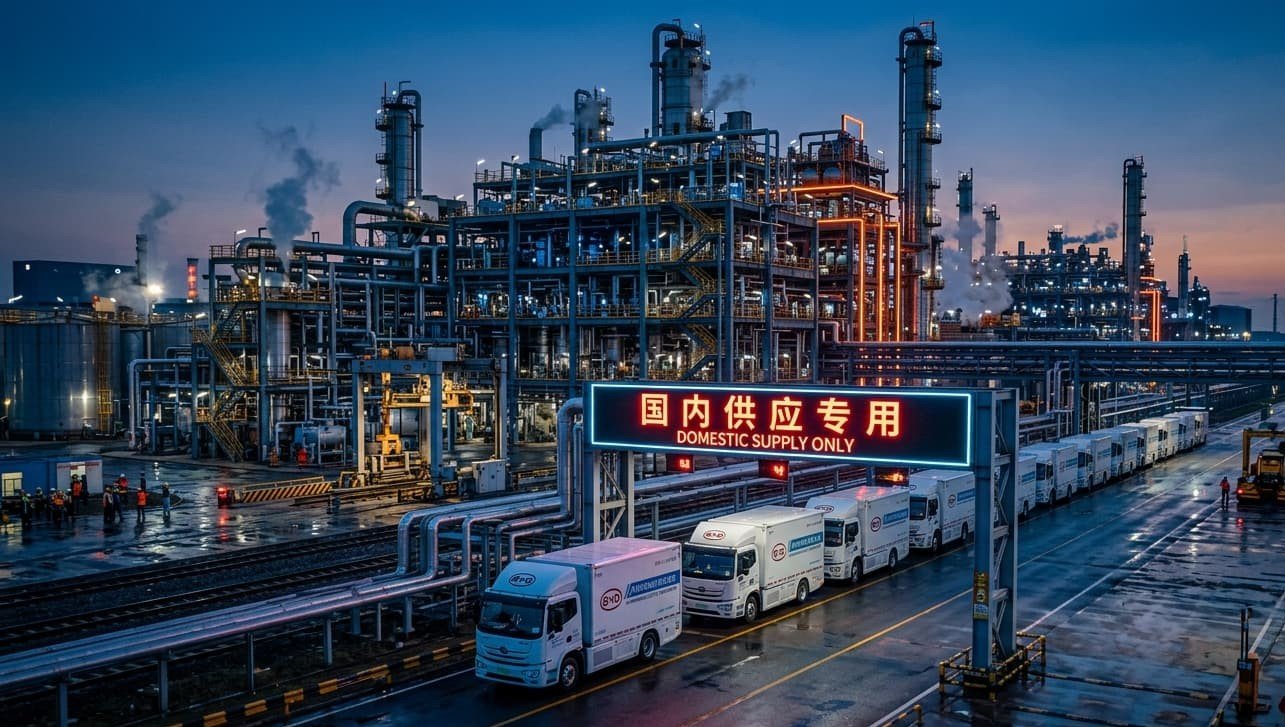
Within the last 30 minutes, internal reports from China’s smelting hubs confirm a strategic pivot: the world’s largest exporter of sulfuric acid is turning off the tap for the global market. By restricting this “industrial blood,” China isn’t just protecting its farmers—it’s weaponizing the supply chain. This hits global prices by creating an immediate deficit for copper and nickel mining worldwide, potentially adding billions to the production costs of everything from EVs to smartphones.
Ground Report: Smelter Silence and EV Pivot
In the industrial corridors of Shenzhen and Ningbo, the directive is clear: “China first.” Sulfuric acid, a byproduct of the copper smelting that China dominates, is now being diverted to domestic phosphate fertilizer plants to stabilize food prices. Meanwhile, tech giant BYD is aggressively pushing its 2026 Seal model into Europe today. With a price tag starting at £45,730, BYD is utilizing cobalt-free “Blade Battery” tech. It’s a strategic masterclass—they are insulating their own supply chain from Middle East oil shocks while the rest of the world scrambles for increasingly expensive raw materials.
Background: The Hormuz Factor
The logic behind this move is tied to the chaos in the Strait of Hormuz. With about a third of the global sulfur trade (the precursor to sulfuric acid) trapped behind naval blockades, the global market was already on life support. China’s move to “stop the bleed” domestically acts as a crisis multiplier for the rest of the world. By keeping the acid at home, Beijing ensures its 11 million metric ton MDI and fertilizer capacity remains operational, even as they face a staggering 85% U.S. tariff on chemical exports designed to cripple their profit margins.
Public Buzz: AI Supremacy and “Sovereign Tech”
On Weibo and across Chinese tech forums, the mood is one of defiant pride. News that China has officially erased the U.S. lead in AI performance (according to the latest 2026 Stanford Index) is racking up millions of views. While the U.S. holds the “chip lead,” the Chinese public is cheering for “Physical AI”—autonomous robotics and smart manufacturing—as the ultimate shield against trade sanctions. However, the reality of 72°F spring days in the UK and shifting demand in Europe means Chinese exporters like Xiaomi and BYD are having to fight harder for every billion in revenue.
Expert Verdict
“China is moving from a ‘Factory of the World’ to a ‘Fortress of Resources,'” says Chen Wei, Senior Trade Strategist. “By withholding intermediate chemicals like sulfuric acid, they are forcing global manufacturers to choose: pay the China premium or watch your production lines stall. This isn’t just a trade move; it’s a structural stress test for the entire global battery and electronics industry.”
Impact Analysis
- Global Tech Prices: Expect a 5-10% price hike on high-end electronics by Q3. As copper and nickel mining costs rise, the “billions” in increased overhead will be passed directly to the consumer.
- Agriculture: Farmers in India and Brazil face a “fertilizer cliff.” Without Chinese acid, global phosphorus fertilizer production could drop by 15%, sending food prices into a tailspin.
- EV Market: BYD and Xiaomi’s move to LFP (Lithium Iron Phosphate) looks prophetic. While rivals struggle with cobalt and nickel costs, Chinese EVs are positioned to dominate the low-to-mid-tier market.
China’s Sulfuric Snub: $Billions in supply chains at risk